Jul11
Concert
Soon
AC/DC
Buy ticketsAffiliate — we may earn a commission at no extra cost
Refund, transfer, and resale rules can vary by event. Open the official listing before purchase.
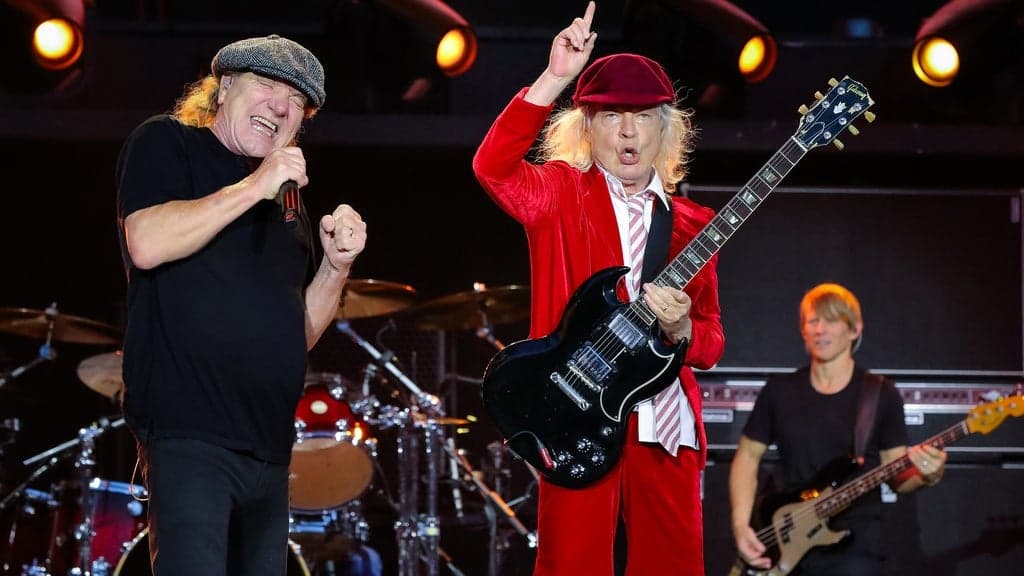
AC/DC, the Canadian hard rock act, currently has 19 confirmed live dates across 18 cities — the most recent routing points at Bank Of America Stadium in Charlotte, and the refund, transfer, and resale terms attached to each ticket are set per event, so verify them on the listing for your chosen date.
Ticketmaster tickets for AC/DC are usually non-refundable unless the show is cancelled, materially changed, or rescheduled under terms that open a refund window. If a date is postponed, your ticket normally remains valid for the new date. Always read the event policy on the checkout screen before paying, especially for VIP, platinum, or resale tickets.
Cancelled means the event is off and refunds are normally issued to the original payment method. Postponed means the promoter is working on a new date, so refunds may not open immediately. Rescheduled means the new date is published; your ticket usually transfers automatically, with refund options depending on the event's posted policy.
AC/DC formed in Sydney, Australia in November 1973 when Glasgow-born brothers Malcolm Young (rhythm guitar) and Angus Young (lead guitar) — both raised in the Burwood suburb of Sydney after their family emigrated in 1963 — recruited vocalist Dave Evans, bassist Larry Van Kriedt, and drummer Colin Burgess for a New Year's Eve gig at Chequers, a Sydney nightclub. The lineup churned through 1974 before settling on Bon Scott as frontman by October of that year, with Phil Rudd on drums and Mark Evans on bass shortly thereafter. The Australian-only debut High Voltage (1975), followed by T.N.T. (1975) and Dirty Deeds Done Dirt Cheap (1976), built the band into a national arena draw before international labels picked up edited compilations under the High Voltage banner. Let There Be Rock (1977), Powerage (1978), and the band's commercial breakthrough Highway to Hell (1979, produced by Robert John 'Mutt' Lange) pushed AC/DC onto the world stage just as Scott's fatal alcohol-poisoning incident in London on 19 February 1980 nearly ended the band entirely. Newcastle-born Brian Johnson, formerly of Geordie, was recruited within weeks. The result was Back in Black (July 1980), a record built on the grief and momentum of Scott's death that became, by most credible accounting, one of the best-selling albums in history with sales estimated at roughly 50 million copies worldwide and an enduring radio and streaming presence that has barely flagged in four decades. For Those About to Rock We Salute You (1981), the patchier mid-eighties run of Flick of the Switch, Fly on the Wall, and Blow Up Your Video, and the Bruce Fairbairn-produced rebound on The Razors Edge (1990) — with Thunderstruck, Moneytalks, and Are You Ready arriving alongside a now-classic Donington Monsters of Rock headline — kept the band touring stadiums through the nineties. Ballbreaker (1995), Stiff Upper Lip (2000), and Black Ice (2008, the band's first global number one in the US) sustained the catalogue, while the Black Ice tour stretched into 2010 across multiple continents and grossed comfortably over US$400 million. The 2010s tested the band's continuity severely: Malcolm Young stepped back in 2014 with dementia and died in November 2017; Phil Rudd was charged in New Zealand and absent from the Rock or Bust touring lineup; Brian Johnson left the tour mid-run in 2016 over hearing-loss concerns with Axl Rose covering remaining dates; Cliff Williams retired at the end of that cycle. The Power Up reunion in November 2020, with Brian Johnson, Phil Rudd, Cliff Williams, and Stevie Young all back in the studio with Angus, was therefore not a foregone conclusion — and the 2024 tour launch, with a partially rebuilt rhythm section, marked their return to the global stadium circuit after roughly an eight-year live absence. The band were inducted into the Rock and Roll Hall of Fame in 2003 by Aerosmith's Steven Tyler, have sold an estimated 200 million records worldwide, and stand alongside The Rolling Stones, Led Zeppelin, and Black Sabbath as one of the defining acts of rock's stadium era.