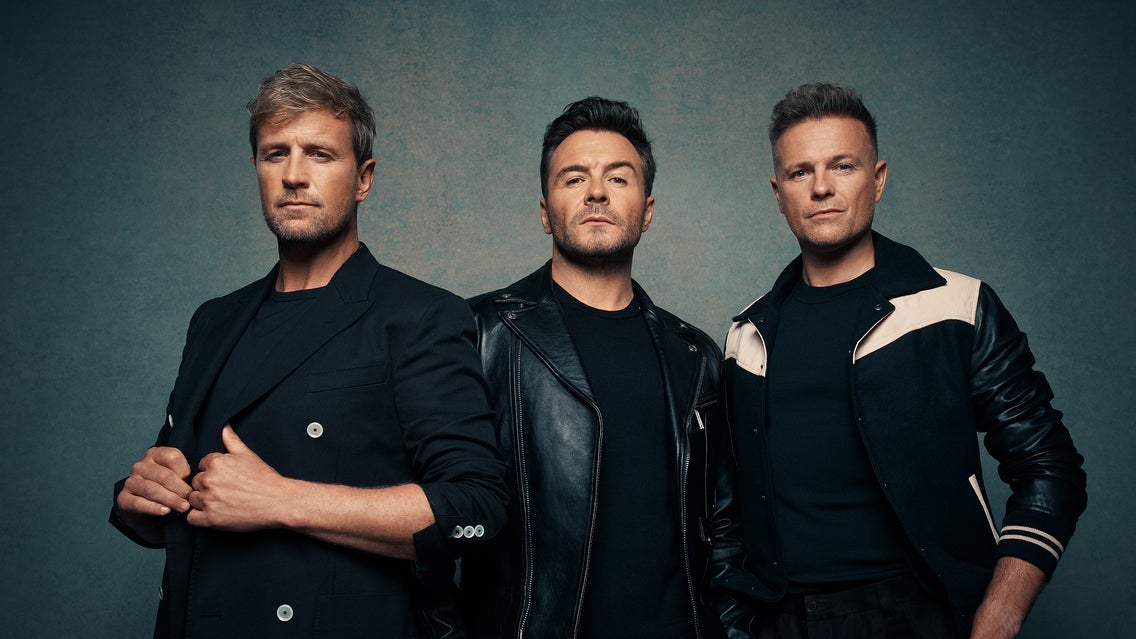
Westlife
22 Sept · 3Arena Dublin
From €52
3Arena Dublin
Tue 22 Sept · 18:00National Stadium
Tue 22 Sept · 19:003Arena Dublin
Wed 23 Sept · 18:003Arena Dublin
Thu 24 Sept · 18:003Arena Dublin
Fri 25 Sept · 18:003Arena Dublin
Sat 26 Sept · 18:00Vicar Street
Wed 30 Sept · 20:00Aviva Stadium
Thu 1 Oct · 19:453Arena Dublin
Sun 4 Oct · 18:003Arena Dublin
Mon 5 Oct · 18:30Compare prices across our Dublin listings — every event row shows the lowest available listed price and a current event link. Set ticket alerts for sold-out shows, watch midweek dates (Tuesday–Thursday), and check our /dublin/cheap-tickets and /dublin/free-events pages for the lowest-priced options in Dublin.
Dublin's live calendar peaks in spring and summer when arena tours and outdoor festivals run, with a second autumn-to-Christmas wave of theatre and arena tours. Indoor venues like 3Arena stay busy through the colder months.
3Arena is the headline arena/stadium for Dublin, hosting the largest touring acts. Mid-size shows route through Aviva Stadium and Croke Park, with theatre and club shows spread across smaller rooms. See our /dublin/concert-venues page for the full venue map with capacities and seating notes.
Dublin's festival calendar mixes ticketed multi-day events with one-off outdoor shows — the lineup rotates year to year. See our /dublin/music-festivals page for the live list of upcoming Dublin festivals with dates, lineups and ticket links, refreshed every 6 hours from official feeds.
Event links on our Dublin pages use available seller and event feeds. Prices show in € where available, while on-sale times, seat maps and availability can change as sellers update their listings.
Most Dublin arenas and theatres — including 3Arena — have dedicated parking lots or nearby paid garages; transit usually serves the downtown venues directly. Individual venue pages on our /dublin/concert-venues hub list parking, transit and rideshare zones for every major room.
Dublin is a live-music city built on top of an even older trad-session city, and the two layers run in parallel on any given week. The headline rooms come first.
The 3Arena on North Wall Quay — the 13,000-capacity dome at the end of the Luas Red Line in the Point Village — is the country's primary arena and carries the heaviest pop, rock and country touring through Ireland. Across the river at Lansdowne Road, the Aviva Stadium (51,700) hosts the Ireland men's and women's rugby and soccer internationals plus the biggest stadium concerts the city can hold.
Croke Park (82,300) up in Drumcondra is the cathedral of Gaelic games — the All-Ireland Hurling and Football Finals fill the place every September — and switches to concert mode for the biggest summer touring acts, the kind of bills Dublin alone can sell at that capacity. Below the stadium tier, Vicar Street on Thomas Street (1,500) is the legendary mid-cap room every touring act asks to play; the Olympia Theatre on Dame Street (1,240) and the Bord Gáis Energy Theatre on Grand Canal Square (2,111) carry the proscenium-stage end.
Whelan's of Wexford Street keeps the singer-songwriter tradition running six nights a week, the Sugar Club on Leeson Street and the Academy on Middle Abbey Street handle indie and electronic touring, and Iveagh Gardens behind the National Concert Hall opens its boutique outdoor summer series each year. This is U2's hometown, and Hozier, Glen Hansard, The Cranberries, The Dubliners, The Pogues and Sinéad O'Connor are part of the same lineage.
The pub-trad-session culture along Camden Street, in Devitts and Whelan's back rooms, threads through it all and is the reason Dublin still feels like the most musical capital in Europe.
Dublin weeks build slowly and finish loud. Mondays and Tuesdays trend quieter across the bigger rooms but the trad-session circuit takes over — the Cobblestone in Smithfield runs its session every night, Devitts on Camden Street books trad Sunday through Thursday, the Auld Dubliner and the Quays in Temple Bar carry the tourist-trad rotation, and the Hughes' Bar and the Brazen Head host long-running sessions for locals.
Wednesday lifts. The Olympia Theatre on Dame Street, Vicar Street on Thomas Street and the Bord Gáis Energy Theatre on Grand Canal Square typically slot midweek runs, the National Concert Hall on Earlsfort Terrace programmes RTÉ National Symphony Orchestra and chamber dates, and the Sugar Club books a midweek cabaret or comedy bill.
Thursday is the lift into the weekend — Whelan's on Wexford Street, the Academy on Middle Abbey Street, the Workman's Club on Wellington Quay and the Button Factory on Curved Street all run on Thursdays, and the 3Arena commonly has a headline arena date. Friday and Saturday are the weight: 3Arena arena tours, sold-out Vicar Street gigs, Olympia headliners, Aviva or Croke Park stadium concerts in the summer months, the Laughter Lounge basement comedy on Eden Quay, theatre runs at the Abbey and Gaiety, and the full Camden Street and Wexford Street club rotation deep into the small hours.
Sundays soften back into trad sessions, classical matinees at the NCH, and the long Sunday-roast-and-acoustic-set rhythm of the Dublin pub.
Temple Bar between Dame Street and the Liffey is Dublin's most tourist-heavy quarter and the city's pub-crawl epicentre. The Olympia Theatre on Dame Street — the Victorian music hall with the iron-and-glass canopy out front — is the area's anchor venue, programming musicals, headline comedy, touring drama and rock concerts. The Workman's Club on Wellington Quay runs indie nights and late DJ sets. The Button Factory on Curved Street covers credible electronic. The tourist-pub triangle — the Temple Bar pub, the Quays, the Auld Dubliner, the Oliver St John Gogarty, the Palace Bar — all run live trad-session bands from afternoon through last orders. The Project Arts Centre on East Essex Street and Smock Alley Theatre in the medieval lanes carry indie theatre. Dublin Castle and Trinity College sit at either end.
Camden Street and Wexford Street running south from the Bleeding Horse pub down toward Harrington Street are the densest live-music corridor in Dublin, and the city's locals' alternative to Temple Bar. Vicar Street is a short walk west on Thomas Street and pulls the corridor's crowd before and after shows. Whelan's of Wexford Street — the singer-songwriter pilgrimage venue with the cobbled courtyard and the upstairs Parlour bar — runs new-band and acoustic bills six nights a week. Devitts on Camden Street books one of the most respected trad sessions in the city Sunday through Thursday with no cover. The Camden, the Lower Deck, the Bleeding Horse, the Hairy Lemon and Cassidy's keep the pub side of the strip running. Camden Street's late-bar density is the highest in the south city.
Smithfield and the Northside cover Dublin's quieter, more lived-in cultural quarter. The 3Arena on North Wall Quay is accessed via the Luas Red Line through the Northside Docklands, with the Point Village shopping and food cluster pulling pre-gig crowds. The Light House Cinema in Smithfield Square is the city's best independent and arthouse cinema and programmes Dublin's film festival dates. The Cobblestone pub off Smithfield Square — under threat from development for years but still standing — is the city's most-respected nightly trad session and the heart of the Northside music tradition. Hughes' Bar on Chancery Street, the Confession Box, the Glimmer Man and the Belfry round out the local pubs. Jameson Distillery Bow Street and the Lighthouse Generator Hostel anchor the visitor side.
Croke Park (82,300) up in Drumcondra is the home of the Gaelic Athletic Association and the cathedral of hurling and Gaelic football. The All-Ireland Finals fill the place every September and the venue switches to concert mode for the biggest summer touring acts — Garth Brooks, Bruce Springsteen, Coldplay and U2 home dates all sell out the ground. The surrounding North Strand and Drumcondra pubs — the Hill 16, Quinn's, the Big Tree, Gaffney's — pull match-day crowds with 60,000-plus people moving through the area on All-Ireland weekends. Drumcondra rail station and Connolly Station on the Luas Red Line drop visitors straight into the area. The GAA Museum at Croke Park covers the history of Gaelic games and the stadium itself.
The Aviva Stadium (51,700) on Lansdowne Road in Ballsbridge is the home of Ireland rugby and soccer — the Six Nations matches in February and March, the Autumn Internationals in November and the men's and women's soccer internationals year-round. The Aviva also hosts the bigger summer stadium concerts and Leinster Rugby's marquee fixtures. The Lansdowne Road DART station drops crowds at the gate. Donnybrook Rugby Ground a mile south carries Donnybrook RFC, Old Wesley, Bective Rangers and the bigger Energia All-Ireland League dates. The Ballsbridge and Donnybrook pubs — the Old Wesley clubhouse, Kiely's of Donnybrook, Crowes — pull match-day crowds. The RDS Arena in Ballsbridge handles Leinster's regular United Rugby Championship home dates and concerts.
Iveagh Gardens behind the National Concert Hall on Earlsfort Terrace is Dublin's hidden Victorian garden — quieter than St Stephen's Green and home to the city's most boutique summer outdoor concert series. The Iveagh Gardens summer programme runs a tight selection of headline outdoor shows through July and August in the walled garden setting, with capacity well below the Marlay Park or Croke Park stadium tier. Adjacent, the National Concert Hall (1,200) is the home of the RTÉ National Symphony Orchestra and runs the city's classical, jazz and chamber programmes year-round. Newman House on St Stephen's Green, the National Gallery on Merrion Square and the Little Museum of Dublin all sit a short walk away. The Harcourt Street late-night corridor is two blocks south.
TradFest fills Temple Bar every January with traditional Irish music programming across the Olympia, the Cobblestone, the Workman's, the Brazen Head and venues across the Temple Bar quarter — Ireland's biggest indoor winter trad festival. The Six Nations Championship build-up brings Ireland fixtures to the Aviva from late January and runs through March. The 3Arena fills out with arena tours coming off New Year, the Bord Gáis Energy Theatre runs its January musical and the Abbey, Gate and Gaiety open the new theatre season.
The Six Nations Championship runs through February with Ireland home matches at the Aviva Stadium pulling 51,700 fans plus the city-centre rugby-pub crowds. The Abbey and Gate Theatres run early-season drama. The Audi Dublin International Film Festival programmes the Light House Cinema and the IFI through late February and early March. The 3Arena and Vicar Street calendars are mid-winter heavy with touring shows.
St Patrick's Festival is the month's anchor — the five-day Mar 17 anchor with the parade through O'Connell Street and Westmoreland Street, free outdoor stages across Temple Bar, the Big Day Out in Merrion Square, the Skyfest fireworks and a citywide programme of music, theatre and family events. The Six Nations Championship closes in mid-March with the bigger Ireland fixtures pulling visitors. Dublin International Film Festival wraps in early March.
April brings the run-in to the Champions Cup rugby knockout rounds with Leinster's bigger European fixtures at the Aviva Stadium. The Dublin Dance Festival programmes the Project Arts Centre and the O'Reilly Theatre. The Iveagh Gardens summer concert lineup typically goes on sale in April. The Abbey, Gate and Gaiety run their spring theatre programmes and the 3Arena enters the tail end of its winter-spring touring stretch.
The Heineken Champions Cup Final and Challenge Cup Final fill the Aviva or Croke Park when Leinster reach the final stages. The International Literature Festival Dublin programmes Smock Alley, the Project and venues citywide. The Dublin Bay Prawn Festival in Howth and the Forbidden Fruit lineup announcement build toward early June. The Forbidden Fruit festival itself runs the June bank holiday weekend in late May or early June at the Royal Hospital Kilmainham.
Forbidden Fruit at the Royal Hospital Kilmainham runs the June bank holiday weekend with an indie, electronic and hip-hop bill across multiple stages. Bloomsday on June 16 takes over Sandymount, the James Joyce Centre and the Davy Byrne's circuit with readings, Edwardian costume and walking tours of Ulysses. The Iveagh Gardens summer outdoor concert series opens in June and runs through August. Pride Dublin and the Pride Parade through the city centre fill the last weekend of the month.
Longitude festival takes over Marlay Park in Rathfarnham every July with festival-tier pop, rock and hip-hop headliners across three days. The Dublin International Comedy Festival programmes Vicar Street, the Olympia, the Laughter Lounge and rooms citywide. The All-Ireland Hurling Final fills Croke Park in mid-to-late July. The Bray Air Display draws crowds to the seafront a 30-minute DART ride south. The Iveagh Gardens summer concert series runs at full programme. The 3Arena slows for the summer outdoor season.
Electric Picnic at Stradbally, Co. Laois — a 90-minute drive south of Dublin — runs the late August or early September bank holiday weekend as Ireland's biggest festival, pulling 70,000-plus including most of Dublin out for the weekend. The All-Ireland Football Final fills Croke Park in late July or early September depending on the year's schedule. Iveagh Gardens summer concerts continue and the Big Grill Festival fills Herbert Park.
The Dublin Theatre Festival runs from mid-September through early October — Ireland's biggest theatre festival, programming the Abbey, the Gate, the Project, the Gaiety and dozens of pop-up venues with new Irish drama, international companies and family programming. The Dublin Fringe Festival overlaps with experimental work across smaller rooms. Culture Night in late September opens hundreds of normally-closed buildings citywide. The All-Ireland GAA Finals weekends finish out at Croke Park. The League of Ireland runs full programme.
The Dublin Theatre Festival closes in early October. The Bram Stoker Festival fills the city for the Halloween weekend with Gothic literary events, the Stokerland family festival in St Patrick's Park and after-dark events across the city centre — Stoker was a Dublin native and the city owns Halloween. The Six Nations Autumn Internationals at the Aviva Stadium begin in late October or early November. The Abbey and Gate run their autumn drama programmes.
The Autumn Internationals run through November at the Aviva Stadium with Ireland hosting the Southern Hemisphere rugby touring sides. The 3Arena, Bord Gáis Energy Theatre, Vicar Street and the Olympia hit the heaviest concentration of touring shows for the year. The Christmas markets begin opening in late November on Wolfe Tone Square and at Dublin Castle. The Bord Gáis Energy Theatre and Gaiety pantomime runs open.
December is the holiday-show stretch. The Gaiety Theatre pantomime and the Olympia, Bord Gáis and 3Arena Christmas family shows fill the schedule. Christmas at the Castle at Dublin Castle, the Wolfe Tone Square markets and the Powerscourt Estate's Winter Lights pull the family programme. The RTÉ National Symphony Orchestra Christmas concerts run at the National Concert Hall. The NYE Festival along the Liffey closes the year with outdoor stages, a Procession of Light and the midnight countdown on the river bridges and Custom House Quay.