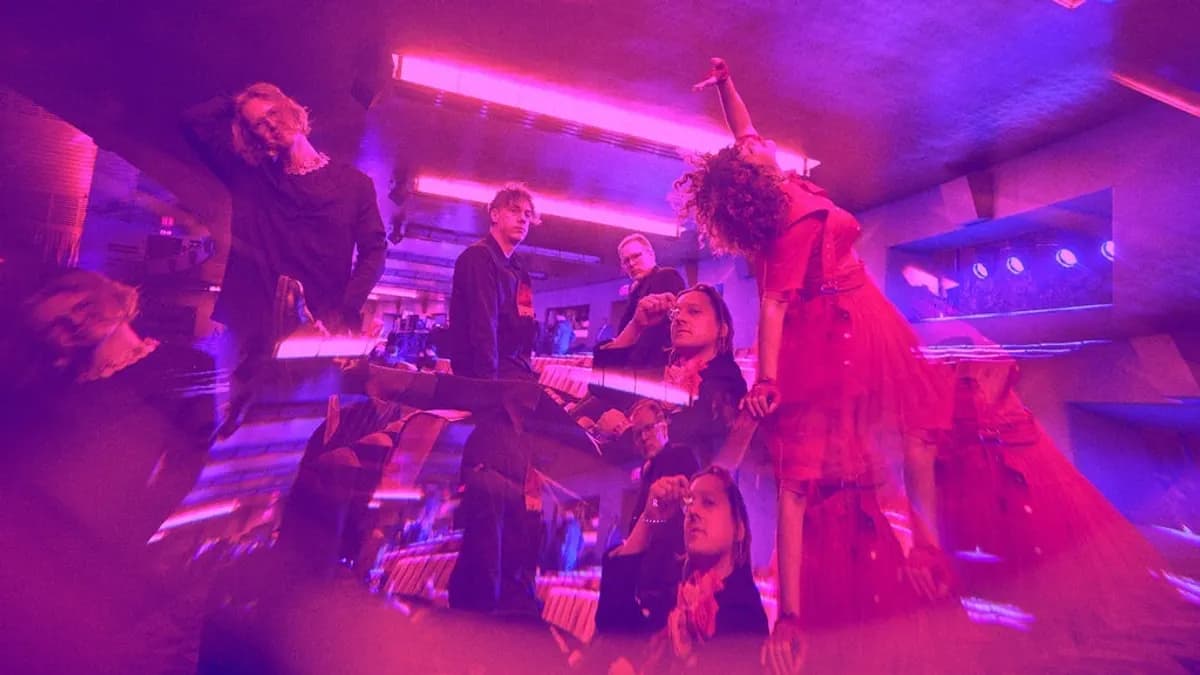
Arcade Fire Tickets 2026 — Prices, Dates & Where to Buy
All Arcade Fire 2026 Ticket Listings
Where to Buy Arcade Fire Tickets
- Ticketmaster (primary). Official face-value seats. Always start here before resale.
- Live Nation. Same inventory as Ticketmaster for most tours, sometimes with a different presale.
- Venue box office. Day-of tickets without resale fees if the show isn't sold out.
- Reputable resale (StubHub, Vivid Seats). For sold-out dates — buyer-protected, but expect markups.
- Fan-to-fan transfers. Ticketmaster lets original buyers resell at face value — worth watching 24–48 hours before the show.
When Do Arcade Fire Tickets Go On Sale?
Arcade Fire tickets typically go on sale on a Friday at 10:00 am local time for each tour stop, with Verified Fan, Live Nation, and credit-card presales opening 1 to 3 days earlier. Exact on-sale times for each Arcade Fire 2026 date are listed on the individual event pages above.
Arcade Fire Tickets — FAQ
How much do Arcade Fire tickets cost in 2026?▼
Where can I buy Arcade Fire tickets safely?▼
When do Arcade Fire tickets go on sale?▼
Are Arcade Fire tickets refundable?▼
Will Arcade Fire add more tour dates?▼
How much are Arcade Fire tickets in 2026?▼
When is Arcade Fire's next concert?▼
Where is Arcade Fire touring in 2026?▼
How do I get Arcade Fire presale tickets?▼
Does Arcade Fire do meet and greets or VIP packages?▼
How long is a Arcade Fire concert?▼
Can I buy Arcade Fire tickets on the day of the show?▼
About Arcade Fire
Arcade Fire formed in Montreal in 2001 around Win Butler, a Texas-born songwriter who had moved to the city to attend McGill University, and Régine Chassagne, a Haitian-Canadian singer and multi-instrumentalist Butler met at a McGill art exhibition. The pair married in 2003 and the band's name and core lineup settled around them across 2003 and 2004 with the recruitment of Richard Reed Parry (a Toronto-born multi-instrumentalist whose contributions range across upright bass, double bass, accordion, piano, guitar, and percussion), Tim Kingsbury (bass and guitar), and Jeremy Gara (drums). Win's younger brother William Butler joined as a multi-instrumentalist and toured with the band from the early Funeral cycle through 2021; he departed the touring lineup before the WE cycle. The expanded live show typically includes a touring collective of string players, additional percussion, and brass, pushing the on-stage count into the eight- to ten-musician range. Funeral arrived in September 2004 on Merge Records, recorded in part at the Hotel2Tango studio in Montreal during a year in which several members of the band's extended family had recently died — the title is direct. It was a critical landmark on release (Pitchfork's 9.7 review remains one of the most-cited modern indie reviews) and on tour produced one of the standout debut sets of the decade, with Wake Up, Rebellion (Lies), Neighborhood #1 (Tunnels), Neighborhood #2 (Laïka), and Neighborhood #3 (Power Out) immediately becoming the spine of the live show. David Bowie publicly evangelised the band, joined them on stage in New York in late 2005 for Wake Up and Five Years, and later collaborated on the Reflektor title track in 2013. Neon Bible (2007) was recorded in a converted church the band bought in Farnham, Quebec, and pushed the sound toward pipe organ, brass band, and a Bruce Springsteen-influenced widescreen Americana; Keep the Car Running, Intervention, No Cars Go, and the title track became permanent live fixtures. The Suburbs (2010) was the breakthrough — a 16-track concept album about suburban Houston and adolescent loss that won the Grammy for Album of the Year in 2011, the Brit Award for International Album, the Juno Award for Album of the Year, and the Polaris Music Prize, and that produced Ready to Start, Sprawl II (Mountains Beyond Mountains), We Used to Wait, City With No Children, and the Suburbs / Suburbs (Continued) bookends. Reflektor (2013) was a double album co-produced with LCD Soundsystem's James Murphy that pulled the band toward dub, disco, and Haitian rara — Reflektor itself, Afterlife, Here Comes the Night Time, and Normal Person became the second act of the live show for nearly a decade. Everything Now (2017) was a more divisive cycle that the band framed around a fictional Everything Now Corporation conceit; the title track and Creature Comfort survived into the touring repertoire. WE (2022), produced by Nigel Godrich, returned the band to a leaner six-song-side / four-song-side structure with The Lightning I, II, Unconditional I (Lookout Kid), Unconditional II (Race and Religion) featuring Peter Gabriel, and End of the Empire. Across the catalogue the band have sold millions of records, won a Grammy, a Brit, two Junos, and the Polaris, and become — through the live show more than any single album — one of the genre-defining touring acts of the 21st century.