Green Day Germany Tour 2026 — German Dates, Cities & Tickets
Green Day Germany Tour 2026 — All Dates
Green Day Germany Tour — FAQ
How much are Green Day tickets in 2026?▼
When is Green Day's next concert?▼
Where is Green Day touring in 2026?▼
How do I get Green Day presale tickets?▼
Does Green Day do meet and greets or VIP packages?▼
How long is a Green Day concert?▼
Can I buy Green Day tickets on the day of the show?▼
Is Green Day coming to Canada in 2026?▼
Is Green Day performing near me?▼
What time does a Green Day concert start?▼
How do I buy Green Day tickets?▼
Where is the cheapest place to buy Green Day tickets?▼
Are Green Day tickets sold out?▼
Who is opening for Green Day on the 2026 tour?▼
What should I wear to a Green Day concert?▼
Can I get a refund on Green Day tickets?▼
About Green Day
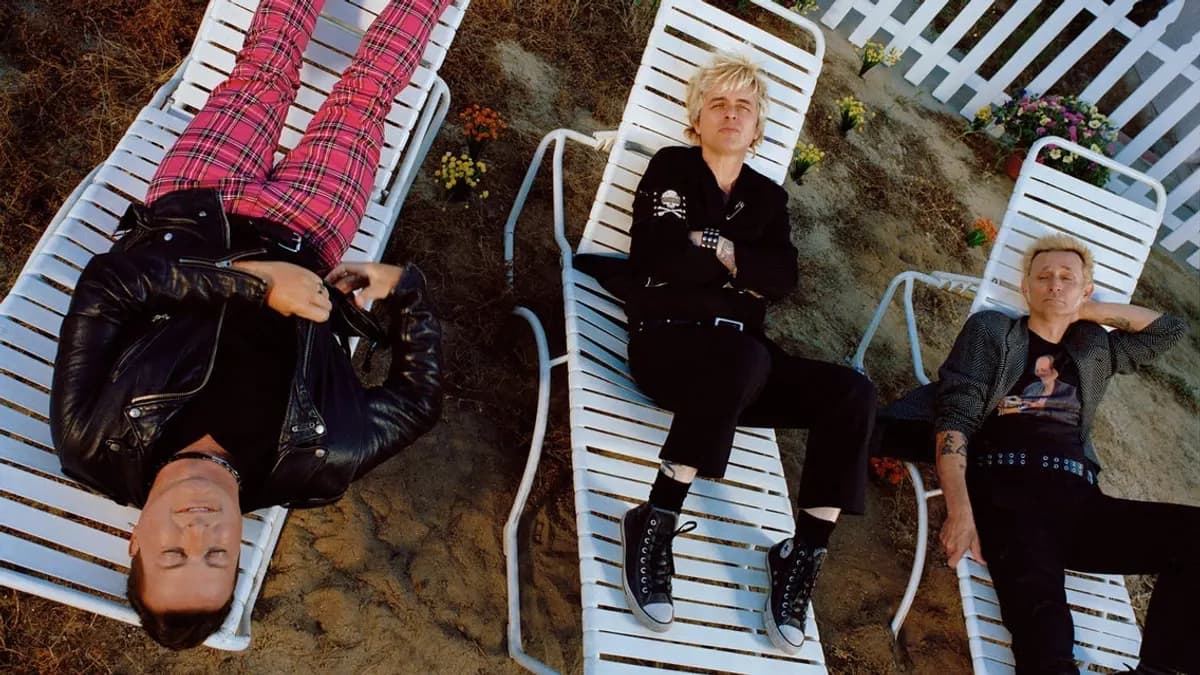
Green Day were born out of the East Bay punk scene that orbited around 924 Gilman Street, the famous all-ages collective venue in Berkeley, California, where in 1986 a teenage Billie Joe Armstrong and his childhood best friend Mike Dirnt — born Michael Pritchard, nicknamed Dirnt for the noise he made air-bassing in school — formed a band first called Sweet Children. By 1987 they had renamed themselves Green Day (a Bay Area slang term for a day spent smoking marijuana) and were gigging Gilman's stage relentlessly. Original drummer John Kiffmeyer left in 1990; in came Tre Cool, born Frank Edwin Wright III, recruited from another local Berkeley band, and the trio that would conquer the world was set.
The 1990 debut 39/Smooth and 1991 follow-up Kerplunk! were released on the independent Lookout! Records and turned Green Day into the most popular underground band in California. The deal that brought them to Warner Bros's Reprise division in 1993 got them banned from Gilman — Gilman did not let major-label bands play — and broke the East Bay scene in half, with hardliners decrying the move as a sellout and a younger generation of pop-punk kids finding their first favourite band. Dookie, released in February 1994, vindicated the decision spectacularly: produced by Rob Cavallo, recorded in three weeks at Fantasy Studios in Berkeley, sold over twenty million copies worldwide and gave the world "Longview," "Basket Case," "When I Come Around" and "She." MTV took it from there. Insomniac (1995), Nimrod (1997, which yielded the acoustic ballad "Good Riddance (Time of Your Life)") and Warning (2000) refined the formula. By the early 2000s, with pop-punk-by-numbers bands flooding the airwaves, Green Day were considered finished.
Then came American Idiot in September 2004 — a 57-minute rock opera about a disaffected kid escaping the suburbs of George W. Bush's America, sold five million copies in the US alone, won the Grammy for Best Rock Album, produced "Boulevard of Broken Dreams," "Wake Me Up When September Ends" and "Holiday," and was adapted into a Tony-winning Broadway musical that opened in 2010 and ran for 422 performances. 21st Century Breakdown (2009), the trilogy of ¡Uno! ¡Dos! ¡Tre! (2012), Revolution Radio (2016) and Father of All Motherfuckers (2020) kept the catalogue moving. Then in January 2024 came Saviors — produced again by Rob Cavallo, recorded between Los Angeles and London, written explicitly in the spirit of the Dookie-American Idiot lineage. Singles "The American Dream Is Killing Me," "Look Ma, No Brains!" and "Bobby Sox" charted internationally; Rolling Stone called it "their loudest, sharpest and most necessary record in twenty years." The current power trio — Armstrong on vocals and guitar, Dirnt on bass and harmony vocals, Tre Cool on drums — is augmented live by Jason White (guitar, since 1999) and a touring keys player, but the heart of Green Day remains the three kids from Berkeley who refused to grow up quietly.