Punjabi · Updated Oct 18, 2026
Jasmine Sandlas Concert Tour 2026
Tickets, Dates & Prices
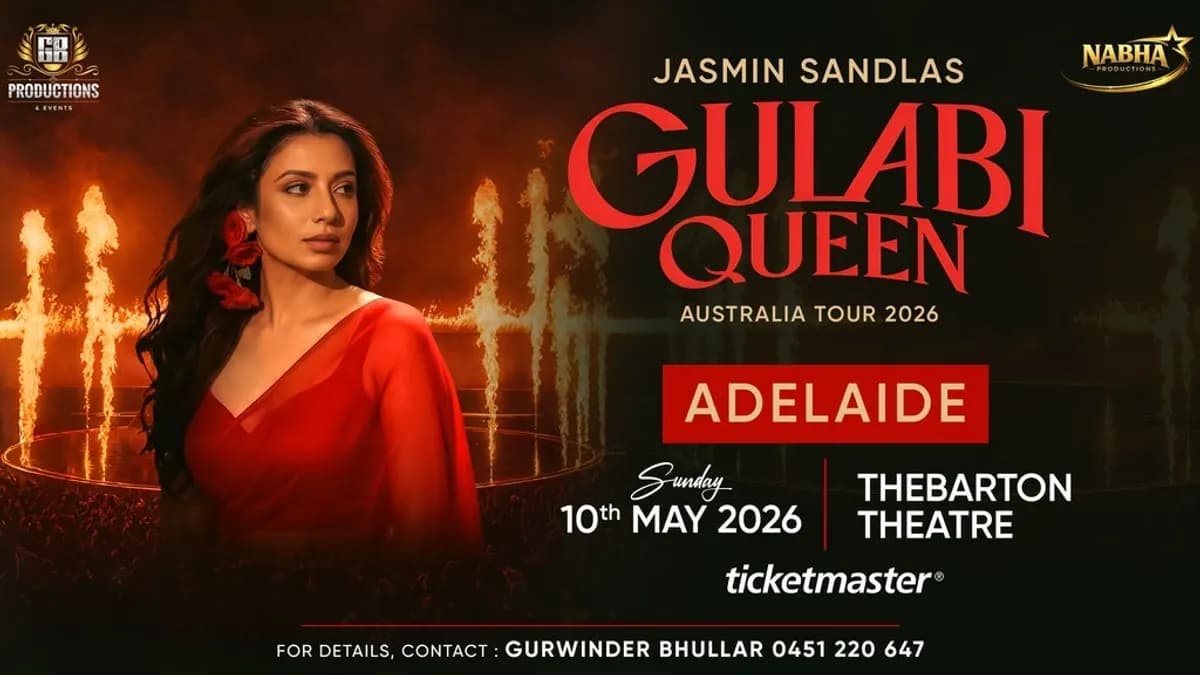
Jasmine Sandlas tickets & tour dates
Find a date, check available prices, and explore ticket options.
No upcoming dates listed right now
Check back for new Jasmine Sandlas listings. You can still explore the artist guide and city pages below.
Prices are per ticket when supplied by the provider. Availability and fees may change at checkout. Prices shown in your display currency are converted estimates.
Jasmine Sandlas is one of the defining Punjabi-pop and Punjabi-Bollywood crossover vocalists of the streaming era and the first Indian-American woman to land a viral Bollywood number-one with a Punjabi-language hook — the 2014 Yaar Naa Miley collaboration with Yo Yo Honey Singh from the Salman Khan film Kick, which built her into a mainstream household name across India, Pakistan, and the global South Asian diaspora simultaneously. Born in Jalandhar in Indian Punjab and raised in the San Francisco Bay Area in California, she occupies a rare bicultural lane in Punjabi music — fluent in the Punjabi village vernacular her family carried from Jalandhar, fluent in American English and the broader West Coast R&B and hip-hop production palette she absorbed growing up in the Bay, and equally at home cutting a folk-leaning Punjabi single in a Mohali studio or a Bollywood club banger at a Mumbai session. Her catalogue behind the live show now stretches from the breakout Lehnga Cholle and Muskaan singles through the Yaar Naa Miley Kick crossover, the Illegal Weapon series with Garry Sandhu (the 2020 Street Dancer 3D placement remains one of her most-streamed catalogue cuts), Gulabi Aankhen, Booze N Blues, Sip Sip, Hello Hello, Adhi Adhi Raat, Don't Be Shy Again, Jaani Tera Naa, and a steady cadence of Punjabi-pop and Punjabi-folk-fusion singles released through T-Series, Speed Records, and independent collaborations across the past decade. Her live show in North America runs primarily through the Punjabi diaspora touring circuit — Toronto, Brampton, Surrey, Vancouver, Calgary, Edmonton, the New York–New Jersey metro, the Bay Area, Los Angeles, Sacramento, Seattle, Houston, and Chicago — and is built around a band-plus-DJ configuration that can pivot from a club-night ticketed event in a banquet hall through to a co-billed Punjabi-pop festival slot and on to a full theatre-tier solo headline depending on the date. This page is the central hub for Jasmine Sandlas tour dates, ticket guidance, setlist context, and the cities where the show consistently lands.
Artist guide & FAQ
Explore Jasmine Sandlas's background, ticket information, and answers to common questions.
Jasmine Sandlas Concert FAQ
Who is Jasmine Sandlas?▼
What language are Jasmine Sandlas concerts in?▼
What is Yaar Naa Miley and is Jasmine Sandlas on it?▼
Was Jasmine Sandlas on the Street Dancer 3D soundtrack?▼
How much do Jasmine Sandlas tickets cost?▼
Are Jasmine Sandlas concerts family-friendly?▼
About Jasmine Sandlas
No Jasmine Sandlas dates are listed by our ticket providers for 2026 right now. Listings refresh daily; check the artist's official channels for announcements outside our coverage.
Inside Jasmine Sandlas
Jasmine Sandlas is one of the defining Punjabi-pop and Punjabi-Bollywood crossover vocalists of the streaming era and the first Indian-American woman to land a viral Bollywood number-one with a Punjabi-language hook — the 2014 Yaar Naa Miley collaboration with Yo Yo Honey Singh from the Salman Khan film Kick, which built her into a mainstream household name across India, Pakistan, and the global South Asian diaspora simultaneously. Born in Jalandhar in Indian Punjab and raised in the San Francisco Bay Area in California, she occupies a rare bicultural lane in Punjabi music — fluent in the Punjabi village vernacular her family carried from Jalandhar, fluent in American English and the broader West Coast R&B and hip-hop production palette she absorbed growing up in the Bay, and equally at home cutting a folk-leaning Punjabi single in a Mohali studio or a Bollywood club banger at a Mumbai session.
Her catalogue behind the live show now stretches from the breakout Lehnga Cholle and Muskaan singles through the Yaar Naa Miley Kick crossover, the Illegal Weapon series with Garry Sandhu (the 2020 Street Dancer 3D placement remains one of her most-streamed catalogue cuts), Gulabi Aankhen, Booze N Blues, Sip Sip, Hello Hello, Adhi Adhi Raat, Don't Be Shy Again, Jaani Tera Naa, and a steady cadence of Punjabi-pop and Punjabi-folk-fusion singles released through T-Series, Speed Records, and independent collaborations across the past decade. Her live show in North America runs primarily through the Punjabi diaspora touring circuit — Toronto, Brampton, Surrey, Vancouver, Calgary, Edmonton, the New York–New Jersey metro, the Bay Area, Los Angeles, Sacramento, Seattle, Houston, and Chicago — and is built around a band-plus-DJ configuration that can pivot from a club-night ticketed event in a banquet hall through to a co-billed Punjabi-pop festival slot and on to a full theatre-tier solo headline depending on the date.
This page is the central hub for Jasmine Sandlas tour dates, ticket guidance, setlist context, and the cities where the show consistently lands.
About Jasmine Sandlas
Jasmine Sandlas was born in Jalandhar, a city in the Doaba region of Indian Punjab known historically as one of the densest emigration corridors out of Punjab and into the North American and British Punjabi diaspora. Her family relocated to the United States when she was young, settling in the San Francisco Bay Area in Northern California, and she was raised inside the Bay Area Punjabi community — a Sikh and Hindu Punjabi diaspora concentrated through cities like Fremont, Union City, Hayward, San Jose, and the broader Tri-Valley corridor, with overlapping cultural ties to the Yuba City, Stockton, and Sacramento Valley Punjabi farming communities that have anchored Punjabi-American life since the early twentieth century.
That bicultural upbringing — Jalandhar village Punjabi at home, California English in school, gurdwara kirtan on Sundays, West Coast R&B and hip-hop radio on the FM dial — shaped the vocal palette that has defined her career: a warm, slightly husky lower register that sits comfortably on Punjabi-folk material, the ornamentation vocabulary of traditional Punjabi singing techniques absorbed through gurdwara and family settings, plus the rhythmic and melodic phrasing of contemporary American pop and R&B production. She began releasing music in the late 2000s through the Punjabi-music label circuit, with her breakout Punjabi singles Lehnga Cholle and Muskaan circulating through YouTube and Punjabi-streaming radio across India, Canada, the United Kingdom, and the United States and establishing her as one of the few Punjabi-language female vocalists with mainstream commercial traction during the early Punjabi-streaming era — a notably male-dominated period of the catalogue.
The 2014 Yaar Naa Miley collaboration with Yo Yo Honey Singh, recorded for the soundtrack of the Salman Khan vehicle Kick and produced inside the broader Honey Singh Mafia Mundeer collective that was reshaping Punjabi-Bollywood crossover at the time, was the breakout that pulled her from the Punjabi-music vertical into the Bollywood mainstream — the track ran at the top of Indian radio rotation for months, anchored the Kick film promotion, and became one of the most-streamed Punjabi-Bollywood crossover singles of the 2010s. Subsequent work expanded the catalogue across Punjabi singles, T-Series Bollywood placements, and independent collaborations: Gulabi Aankhen with Yo Yo Honey Singh, Booze N Blues, Sip Sip, Hello Hello, Adhi Adhi Raat, Don't Be Shy Again with Bali Sagoo and Gippy Grewal, the Illegal Weapon series with Garry Sandhu (the original Illegal Weapon single and the 2020 Illegal Weapon 2.0 Bollywood placement in the Varun Dhawan and Shraddha Kapoor film Street Dancer 3D, which remains one of her highest-streaming catalogue cuts), and a sustained run of Punjabi-folk-fusion and Punjabi-pop singles released through T-Series, Speed Records, and independent collaborations.
She has worked with the dominant Punjabi-music labels of the streaming era (T-Series for Bollywood-aligned material, Speed Records and Saga Music for core Punjabi singles, independent collaborations across producers including Intense, Snappy, Preet Hundal, and Bob) and remains one of the highest-profile female voices in the Punjabi catalogue. She is widely credited as one of the artists who opened the door for the next generation of female Punjabi-pop vocalists, both by holding mainstream commercial traction inside a male-dominated industry through the 2010s and by demonstrating that an Indian-American Punjabi vocalist could anchor a Bollywood number-one without translating away from the Punjabi-language hook.
Jasmine Sandlas live show and North American touring
A Jasmine Sandlas live show in North America runs through the Punjabi diaspora touring circuit and is built around a flexible band-plus-DJ configuration that can pivot across three production tiers depending on the date. The full ticketed solo headline configuration runs roughly 75 to 90 minutes with band, DJ, and a small dance backing — typical at theatre-tier rooms like the Queen Elizabeth Theatre in Vancouver, the Rebel and Danforth Music Hall configurations in Toronto, the Saroya Theatre and SAP Center backstage in the Bay Area, and the Houston and Chicago South Asian banquet-hall circuits that carry the largest dedicated South Asian audiences in their respective metros.
The co-billed Punjabi-pop tour configuration places her on multi-artist bills alongside other Punjabi-pop and Punjabi-Bollywood headliners, typically running a 35-to-45-minute set inside a 3-to-4-hour show — a format that has anchored her appearances at Punjabi-music festivals like Vaisakhi Mela festivals across the diaspora, NRI-promoter package tours, and large diaspora cultural events in Toronto, Brampton, Surrey, Vancouver, Calgary, Edmonton, Sacramento, the Bay Area, and the New York–New Jersey metro. The festival and community-event configuration sees her on Bollywood and Punjabi-music festival stages, gurdwara cultural celebrations, Vaisakhi melas, Diwali events, and South Asian university association concerts at campuses with significant South Asian student populations.
The setlist arcs from Punjabi-folk-tinged openers through the Bollywood crossover block (Yaar Naa Miley, Illegal Weapon, Gulabi Aankhen) and the mid-set Punjabi single anthems (Lehnga Cholle, Muskaan, Sip Sip, Hello Hello) before closing with the higher-tempo dance material. Routing across North America tends to cluster around the largest Punjabi diaspora corridors — the Greater Toronto Area, the Lower Mainland of British Columbia, the Bay Area and Sacramento Valley in Northern California, the Houston and Dallas–Fort Worth Punjabi communities, and the New York–New Jersey Punjabi corridor through Edison, Iselin, and Jersey City.
International routing has historically extended into the United Kingdom (London, Birmingham, Manchester), Australia (Sydney, Melbourne), New Zealand, and the Punjabi-diaspora corridors of continental Europe as the calendar permits, with periodic appearances in India for Bollywood promotional cycles, brand events, and select Punjabi-music festivals. Any forward-looking tour calendar for the current cycle would have to be confirmed against the schedule strip at the top of this page, which pulls from the live event feed and reflects only currently confirmed dates rather than speculative routing.
Jasmine Sandlas tickets
Jasmine Sandlas tickets for North American dates are typically priced lower than the arena-tier Punjabi headliners (the Diljit Dosanjh, AP Dhillon, and Karan Aujla stadium and arena routings) because her live show generally runs through theatre-tier, banquet-hall, and co-billed multi-artist configurations rather than dedicated solo arena dates. Expect general-admission ticketing on most banquet-hall and community-event configurations starting between $40 and $75 at on-sale and climbing past $125 for VIP, meet-and-greet, and front-of-stage tables once dynamic pricing or premium tiering engages.
Theatre-tier solo headline dates and Punjabi-pop festival co-bills tend to run between $55 and $135 for general admission with VIP packages — typically including premium seating, a meet-and-greet photo opportunity, and signed merchandise — priced between $150 and $325 depending on the market and the production tier. Floor and front-row reserved at the largest North American Punjabi-pop dates have historically opened in the $95 to $175 range and clear inside the first 24 to 48 hours of the public on-sale window.
Primary on-sales for theatre-tier and ticketed-venue dates run through Ticketmaster across the US and Canada, with regional NRI-promoter platforms (TicketingHub, Eventbrite, Showpass, and dedicated Punjabi-event ticketing portals) carrying the banquet-hall and community-event configurations. Pre-sales typically open 24 to 48 hours ahead of the public on-sale through the promoter mailing list and the Jasmine Sandlas social media channels (Instagram and YouTube primarily).
On the secondary market, StubHub, SeatGeek, Vivid Seats, and Ticketmaster's own resale carry buyer guarantees that cover non-delivery and fraudulent listings — stick to verified platforms with non-delivery protection. Avoid the WhatsApp and Instagram DM market for Punjabi-tour tickets generally; secondary fraud volume on Punjabi diaspora tour inventory is unusually elevated.
For lower-cost banquet-hall events, many dates sell through community channels, gurdwara networks, and South Asian grocery and retail outlets in the host city — a parallel sales channel that exists alongside the digital platforms and that often holds inventory after the online allocation has cleared.
Jasmine Sandlas setlist
A Jasmine Sandlas setlist on a typical North American date runs roughly 16 to 22 songs across 75 to 90 minutes in the solo theatre-tier configuration and a tighter 9 to 12 songs across 35 to 45 minutes in the co-billed Punjabi-pop tour configuration. The fixed core typically opens with a Punjabi-folk-leaning track or a softer mid-tempo single to set the room — Muskaan or a Lehnga Cholle medley has historically anchored the opening slot at theatre dates — before pivoting into the Bollywood crossover block where Yaar Naa Miley (the 2014 Honey Singh and Kick title track that remains the most universally recognised cut in her catalogue and the moment that pulls every audience into a unified singalong) sits as the centrepiece.
The mid-set anthem block typically runs Gulabi Aankhen, Sip Sip, Hello Hello, and Booze N Blues through the higher-tempo Punjabi-pop and Bollywood-club material, with the Illegal Weapon series (Illegal Weapon and the Street Dancer 3D Illegal Weapon 2.0 configuration with Garry Sandhu) routinely dropping as the late-set dance anthem given its Bollywood-soundtrack visibility. The closing block leans into the contemporary Punjabi-pop singles cycle and a Punjabi-folk-fusion encore moment that varies night to night based on the market and the audience composition.
Night-to-night variation is real — collaborator drops at festival dates (Garry Sandhu drops when the routing overlaps, Yo Yo Honey Singh tribute moments at Yaar Naa Miley, occasional surprise guest features in Toronto and Surrey markets), regional Punjabi guest features, and city-specific covers shift slot to slot, and the production routinely stretches the higher-tempo material with the DJ extending breaks for crowd interaction. For exact night-by-night setlists, setlist.fm carries crowd-submitted lists usually within hours of the encore for the higher-profile dates and remains the most reliable source for what was actually played at a specific Jasmine Sandlas show.
Tour cities
Toronto
Toronto is the single largest Jasmine Sandlas market in North America. The Greater Toronto Area Punjabi community — concentrated through Brampton, Mississauga, the Etobicoke corridor, north Scarborough, and Markham — is the densest Punjabi diaspora cluster outside Punjab itself, with the Sikh population in Brampton alone running into the hundreds of thousands and anchoring the bulk of Punjabi-language ticket demand across the metro. Jasmine Sandlas Toronto dates have historically run through a mix of configurations: solo theatre-tier dates at the Rebel and the Danforth Music Hall, co-billed Punjabi-pop multi-artist concerts at the Coca-Cola Coliseum and the Toronto Congress Centre, large community-event configurations at the Pearson Convention Centre and Chandni Banquet Hall in Brampton, and select Vaisakhi Mela and Punjabi-music festival appearances at the Khalsa Day parade celebrations downtown and at Brampton's Khalsa Centre. Brampton's Khalsa Day parade in April routinely draws six-figure crowds and pulls Punjabi-pop performance demand across the metro. Pre-sales for ticketed Toronto dates run through Ticketmaster and the regional promoter mailing lists 24 to 48 hours before the public on-sale. Brampton banquet-hall dates often sell through community-channel networks (South Asian grocery outlets, gurdwara newsletters, the local Punjabi-language radio stations Red FM and Bombay TV) alongside the digital ticketing platforms. Plan transit and parking early — Brampton venues fill the lots inside the hour before doors.
Vancouver
Vancouver — and the broader Surrey, Delta, Burnaby, and Abbotsford corridor — is one of Jasmine Sandlas's strongest North American markets. The Lower Mainland Sikh diaspora is the densest concentration of Punjabi-Canadian listeners on the West Coast, with Surrey alone home to one of the largest Sikh populations of any city in North America and anchoring much of the regional Punjabi-pop ticket demand. Jasmine Sandlas Vancouver dates have historically played a mix of theatre-tier venues (the Queen Elizabeth Theatre, the Vogue Theatre, the Orpheum), co-billed Punjabi-pop festival dates at the Abbotsford Centre and the PNE Forum, and large banquet-hall configurations at Grand Taj Banquet Hall and Aria Banquet Hall in Surrey for community-event-tier shows. Vaisakhi Mela season in April — when the Surrey Vaisakhi parade routinely draws crowds north of half a million attendees — anchors the spring Punjabi-pop touring window and consistently pulls a Jasmine Sandlas performance somewhere in the Lower Mainland calendar. Pre-sales for ticketed venues run through Ticketmaster and the regional promoter mailing lists; community-event dates sell through gurdwara newsletters, South Asian grocery outlets in Surrey and Abbotsford, and the local Punjabi-language radio stations. Cross-border traffic from Seattle and the Bellingham Punjabi community adds to the Lower Mainland demand profile on confirmed Jasmine Sandlas dates.
Calgary
Calgary is the largest Punjabi diaspora market in the Prairies and has consistently hosted Jasmine Sandlas across the past decade through theatre-tier dates, Vaisakhi Mela appearances, and co-billed Punjabi-pop tour stops. The northeast Calgary Sikh community — concentrated through Martindale, Falconridge, Castleridge, Saddleridge, and Taradale, and anchored on the Dashmesh Culture Centre on 28 Street NE and the cluster of gurdwaras through the northeast quadrant — drives the demand profile. Calgary Jasmine Sandlas dates have historically run at the Grey Eagle Resort Event Centre, the Plaza Theatre, the Genesis Centre in the northeast, and the Westin Calgary Airport and surrounding hotel banquet halls for community-event-tier configurations. Vaisakhi Mela season at Olympic Plaza and the broader Stampede Park grounds during April routinely pulls Punjabi-pop performance demand across the metro. Pre-sales for ticketed dates run through Ticketmaster, Showpass, and the regional Punjabi-promoter mailing lists 24 to 48 hours before the public on-sale. Community-event tickets sell through South Asian grocery outlets (the Saraya and Punjab Sweets and Restaurant networks across northeast Calgary), gurdwara newsletters, and the local Punjabi-language radio station Red FM Calgary. Plan parking and arrival early — the northeast banquet-hall lots fill rapidly inside the hour before doors.
Edmonton
Edmonton hosts Jasmine Sandlas through a mix of theatre-tier dates at the Winspear Centre, the Citadel Theatre, the Northern Alberta Jubilee Auditorium, and large community-event configurations at the Radisson Hotel and Convention Centre, the Chateau Louis Hotel and Conference Centre, and surrounding banquet-hall venues in the Mill Woods corridor. The Mill Woods and southeast Edmonton Sikh community is one of the most concentrated in the prairie provinces — anchored on the Mill Woods gurdwara cluster and the broader southeast Edmonton Punjabi residential and commercial corridor — and drives the bulk of Jasmine Sandlas ticket demand across the metro. Edmonton dates routinely pair with the Calgary leg on the same western Canadian routing block, and many fans book both nights inside a single trip. Pre-sales for ticketed venues run through Ticketmaster and the regional promoter mailing lists; community-event-tier banquet-hall dates sell through South Asian grocery outlets in Mill Woods, gurdwara newsletters, and the local Punjabi-language radio station. Vaisakhi Mela season in April anchors the spring Punjabi-pop performance calendar in Edmonton, with Mill Woods Park and the surrounding cultural facilities hosting community celebrations that historically draw Punjabi-pop performance demand across the metro.
New York
New York and the New Jersey metro host Jasmine Sandlas through a mix of theatre-tier dates and large banquet-hall configurations across the tri-state Punjabi diaspora. The Edison, Iselin, and broader Middlesex County, New Jersey corridor — one of the densest South Asian residential and commercial communities on the East Coast and home to the Royal Albert's Palace, Maharaja Banquet Hall, and Royal Albert's Palace network of South Asian community-event venues — anchors much of the regional demand profile, with the Queens, Long Island, and Jersey City Punjabi communities adding to the broader tri-state audience. Jasmine Sandlas dates in the New York metro have historically run at the Sony Hall in Manhattan, the Royal Albert's Palace network of banquet halls across Edison and Fords, the Royal Manor in Garfield, NJ, and select South Asian university association concerts at Rutgers University, Columbia University, NYU, and the broader university circuit with significant South Asian student populations. The South Asian Diwali celebrations across the tri-state every October–November routinely pull Punjabi-pop performance demand. Pre-sales for ticketed venues run through Ticketmaster, Eventbrite, and the regional NRI-promoter mailing lists. Banquet-hall dates sell through community channels (Patel Brothers and Subzi Mandi grocery networks across Edison and Iselin, gurdwara newsletters across the tri-state, the local South Asian-radio stations Bolly FM and Radio Salaam Namaste) alongside the digital platforms.
San Francisco
The San Francisco Bay Area is Jasmine Sandlas's home market — she was raised in the Bay through her teenage years and early career, and the regional Punjabi-American community runs through Fremont, Union City, Hayward, San Jose, Santa Clara, the broader Tri-Valley corridor (Pleasanton, Dublin, San Ramon), and the Sacramento Valley Punjabi farming communities through Yuba City, Live Oak, and Stockton that anchor Punjabi-American life in Northern California. Bay Area Jasmine Sandlas dates have historically run at the San Jose Center for the Performing Arts, the SAP Center backstage configurations, the Flint Center for the Performing Arts, the Saroya Theatre at San Jose State, the Fremont Park Theater, and large banquet-hall configurations at the India Community Center in Milpitas and the broader South Bay South Asian-event network. Vaisakhi Mela season in April at the Yuba City Sikh Parade — one of the largest Sikh Vaisakhi celebrations in North America, with crowds routinely exceeding one hundred thousand attendees — pulls Punjabi-pop performance demand across the entire Northern California Punjabi community. Pre-sales for ticketed venues run through Ticketmaster and the regional promoter mailing lists. Community-event banquet-hall dates sell through South Asian grocery outlets across Fremont and Union City, gurdwara newsletters, and the regional Punjabi-language and South Asian-radio outlets across the Bay Area and Sacramento Valley.
Los Angeles
Los Angeles plays Jasmine Sandlas through a mix of theatre-tier dates and large banquet-hall configurations across the Southern California Punjabi diaspora. The Artesia, Cerritos, and broader Orange County Punjabi community — anchored on the Artesia Pioneer Boulevard South Asian retail corridor known locally as Little India — concentrates demand, with the San Fernando Valley and the Inland Empire (Riverside, Corona, Chino Hills) Punjabi communities adding to the broader metro audience. Los Angeles Jasmine Sandlas dates have historically run at the Saban Theatre in Beverly Hills, the Wilshire Ebell Theatre, the Ricardo Montalban Theatre, and large banquet-hall configurations at the Hilton Universal City and Marriott Anaheim for community-event-tier shows. The Anaheim and Cerritos Punjabi-community Vaisakhi Mela season in April routinely pulls Punjabi-pop performance demand across the broader Los Angeles metro. Pre-sales for ticketed venues run through Ticketmaster and the regional NRI-promoter mailing lists 24 to 48 hours before the public on-sale. Community-event banquet-hall tickets sell through South Asian grocery outlets across Artesia and Cerritos (the Patel Brothers, India Sweets and Spices, and Bharat Bazaar networks), gurdwara newsletters across Riverside and Buena Park, and the local Punjabi-language and South Asian-radio outlets across the metro.
Sacramento
Sacramento and the Yuba City–Sutter County Punjabi farming corridor through the Sacramento Valley anchor one of the oldest and most rooted Punjabi-American communities in North America, with Sikh Punjabi families farming the peach, prune, and almond orchards of Sutter County since the early twentieth century. The Yuba City Sikh Parade in November — one of the largest annual Sikh celebrations in North America with crowds routinely exceeding one hundred thousand attendees — routinely pulls Punjabi-pop performance demand across the broader Northern California Punjabi community and into the surrounding agricultural communities through Marysville, Live Oak, Gridley, and the broader Sutter and Yuba County corridor. Sacramento Jasmine Sandlas dates have historically run at the Crest Theatre, the Memorial Auditorium, the Sacramento Convention Center, and large community-event configurations at gurdwara and banquet halls in Yuba City and across the Sacramento Valley. Pre-sales for ticketed venues run through Ticketmaster and the regional promoter mailing lists. Community-event-tier dates sell through South Asian grocery outlets in Yuba City and Sacramento, gurdwara newsletters across the Sacramento Valley, and the regional Punjabi-language radio outlets across Northern California. Plan ahead for the spring and fall Vaisakhi and Sikh Parade calendars — community-event tickets clear quickly inside the parade-season window.
Seattle
Seattle plays Jasmine Sandlas through a mix of theatre-tier dates and community-event banquet-hall configurations across the Pacific Northwest Punjabi diaspora. The Bothell, Renton, Kent, and broader King County Punjabi community drives the regional demand profile, with the Bellevue and Sammamish corridor and the cross-border traffic from the Lower Mainland of British Columbia adding to the broader metro audience. Seattle Jasmine Sandlas dates have historically run at the Moore Theatre, the Neptune Theatre, the Paramount Theatre, the accesso ShoWare Center in Kent for larger community-event configurations, and select banquet-hall venues across Bellevue and Kent for community-event-tier shows. The Pacific Northwest routing typically pairs Seattle with Vancouver inside a single trip — many fans cross the border for both nights, and the secondary market on Seattle dates is unusually deep because of the cross-border traffic. Pre-sales for ticketed venues run through Ticketmaster and the regional promoter mailing lists. Community-event banquet-hall tickets sell through South Asian grocery outlets across Bothell and Bellevue, gurdwara newsletters across King County, and the regional Punjabi-language radio outlets across the Pacific Northwest. Border-crossing fans should plan for tour-night traffic at Peace Arch and Pacific Highway crossings.
Houston
Houston hosts Jasmine Sandlas through a mix of theatre-tier dates and large community-event banquet-hall configurations across the Texas Punjabi and broader South Asian diaspora. The Sugar Land, Pearland, Katy, and Stafford Punjabi communities — concentrated through Fort Bend County and anchored on the Sikh Center of Gulf Coast Area in Houston and the broader gurdwara cluster across the southwest Houston corridor — drive the regional demand profile, with Dallas–Fort Worth and Austin Punjabi communities adding to the broader Texas audience on regional drive-in demand. Houston Jasmine Sandlas dates have historically run at the Stafford Centre Performing Arts Theatre, the Cullen Performance Hall at the University of Houston, the Hobby Center for the Performing Arts, and large community-event configurations at the Stafford Centre and surrounding banquet-hall venues across Sugar Land. The Texas Punjabi Vaisakhi Mela season and the broader South Asian community-festival calendar through the spring and fall routinely pull Punjabi-pop performance demand across the metro. Pre-sales for ticketed venues run through Ticketmaster and the regional NRI-promoter mailing lists. Community-event banquet-hall tickets sell through South Asian grocery outlets across Sugar Land and Pearland, gurdwara newsletters across Fort Bend County, and the regional South Asian-radio outlets across the Texas Gulf Coast.
Chicago
Chicago plays Jasmine Sandlas through a mix of theatre-tier dates and community-event banquet-hall configurations across the Midwest Punjabi diaspora. The northwest suburban Punjabi community — concentrated through Schaumburg, Naperville, Aurora, Bartlett, and the broader DuPage and Kane County corridor, and anchored on the Sikh Religious Society of Palatine and the broader gurdwara cluster across the northwest suburbs — drives the regional demand profile, with the Indiana and Wisconsin Punjabi communities adding to the broader Midwest audience on regional drive-in demand. Chicago Jasmine Sandlas dates have historically run at the Copernicus Center on the Northwest Side, the North Shore Center for the Performing Arts in Skokie, the Rosemont Theatre, and large community-event configurations at the Meridian Banquets in Rolling Meadows, the Belvedere Banquets in Elk Grove Village, and surrounding northwest-suburban banquet halls. The Chicago Punjabi community Vaisakhi Mela season in April and the broader South Asian Diwali celebrations through October–November routinely pull Punjabi-pop performance demand. Pre-sales for ticketed venues run through Ticketmaster and the regional NRI-promoter mailing lists. Community-event banquet-hall tickets sell through South Asian grocery outlets across the Devon Avenue corridor in Chicago and the northwest suburbs (the Patel Brothers and Resham Patel network), gurdwara newsletters, and the regional South Asian-radio outlets across the Midwest.
London
London is the central Jasmine Sandlas market across the United Kingdom and continental Europe — the British Punjabi community across Southall, Hounslow, Hayes, the broader West London corridor, and the East London and East Midlands Punjabi clusters across Birmingham, Wolverhampton, and Leicester anchors the densest Punjabi diaspora outside Canada and the Northern California Punjabi-American communities. Jasmine Sandlas London dates have historically run through a mix of theatre-tier venues (the indigO2 at the O2, the Eventim Apollo in Hammersmith, the Roundhouse in Camden) and large community-event configurations at the Park Hall in Wolverhampton, the Tarbiyah Academy in Birmingham, and surrounding banquet-hall venues across Southall and Hounslow for community-event-tier shows. The London Punjabi-music festival calendar — Vaisakhi Mela in Trafalgar Square in April, the Punjabi-music festival circuit through the summer, and select South Asian university association concerts at the LSE, UCL, King's College London, and the broader London university circuit — anchors much of the regional performance demand. Pre-sales for ticketed venues run through Ticketmaster UK, AXS, and the regional NRI-promoter mailing lists. Community-event banquet-hall tickets sell through South Asian grocery outlets across Southall (the Quality Foods and Dokal & Sons networks), the British Punjabi-radio stations Sunrise Radio and BBC Asian Network, and gurdwara newsletters across the broader UK Punjabi community.
Fans Also Viewed
Other Punjabi artists on Catch Movement.


Also on tour now
- Fontaines D.C.Fontaines D.C. setlistOpening actTour dates
- Leon BridgesLeon Bridges setlistOpening actTour dates
- Niall HoranNiall Horan setlistOpening actTour dates
- EaglesEagles setlistOpening actTour dates
- PowderfingerPowderfinger setlistOpening actTour dates
- Teddy SwimsTeddy Swims setlistOpening actTour dates
- Riley GreenRiley Green setlistOpening actTour dates
- Lizzy McAlpineLizzy McAlpine setlistOpening actTour dates