Jul25
Concert
Soon
Tacos and Tequila Festival
Buy ticketsAffiliate — we may earn a commission at no extra cost
Choose your date first, then check the venue's official parking and transit page before checkout.

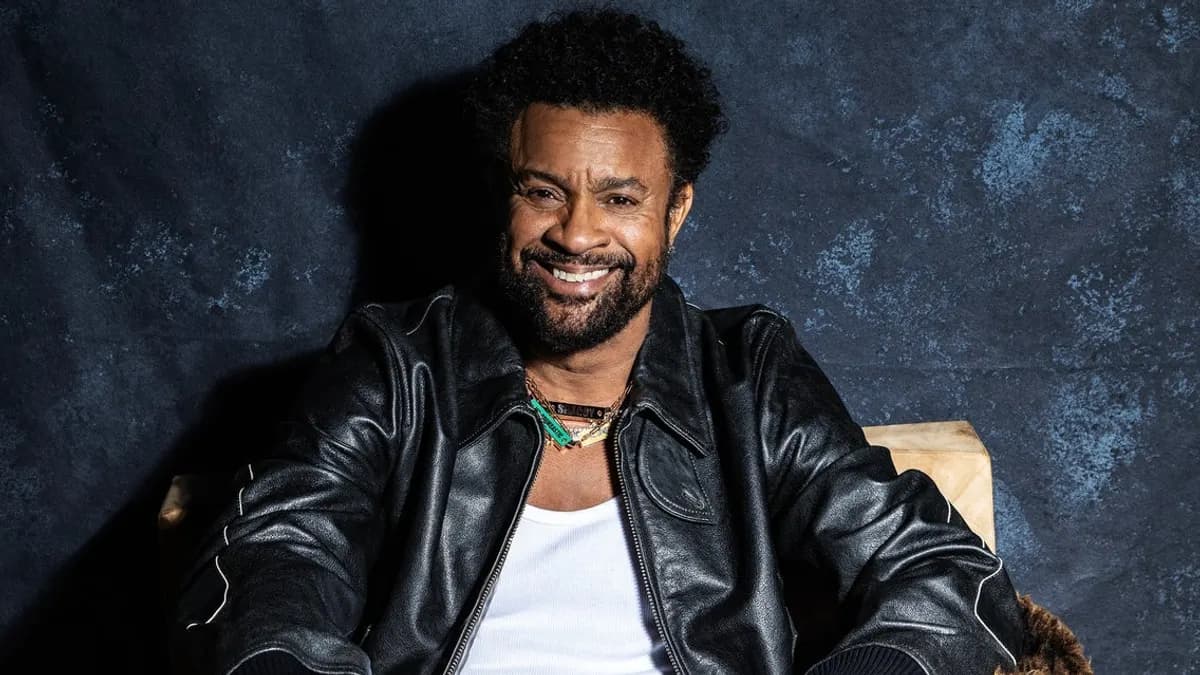
Shaggy, the Jamaican dancehall act, currently has 2 confirmed live dates across 2 cities — the most recent routing points at Crushers Stadium in Avon, so the parking and arrival guidance below is calibrated to the venue type those dancehall shows usually book.
The next confirmed Shaggy show is at Crushers Stadium in Avon. For arena and stadium dates, book official parking as soon as you buy tickets if the venue offers it. Lots closest to the building fill first, and event-night pricing can jump when another game, concert, or downtown festival is happening nearby.
Rideshare is easiest before doors, but pickup zones surge after the encore. Walk a few blocks away from the venue before requesting a ride, or wait 20-30 minutes for prices to settle. If the venue is near rail or subway service, transit is often faster than driving after the show.
Orville Richard Burrell was born in Kingston, Jamaica in October 1968 and spent his early childhood in the rural parish of St. Mary on the island's north coast before his mother sent for him to join her in the Flatbush neighborhood of Brooklyn at age 18. The Brooklyn move dropped him into the New York City sound system culture of the late 1980s — block parties, basement parties, dancehall sound clashes in the Caribbean diaspora corridors of East Flatbush, Crown Heights, and Canarsie — and he started toasting on local sound systems under the nickname Shaggy, a childhood handle borrowed from the perpetually long-haired Scooby-Doo character because of his own then-untrimmed hair. He enlisted in the United States Marine Corps in 1988, served as a field artillery cannon crewman with the 10th Marine Regiment, and deployed to the Persian Gulf during Operation Desert Storm in 1990 and 1991 — a stretch he has talked openly about in interviews as the period when he learned the discipline, time management, and capacity to absorb pressure that has carried through every subsequent phase of his career. He recorded his first single, 'Mampie,' in 1993 with the local Brooklyn production duo of Sting International and Robert Livingston, and followed it with the breakout 'Oh Carolina' — a cover of the 1958 Folkes Brothers Jamaican classic, rebuilt on a dancehall riddim — which exploded to No. 1 on the UK Singles Chart in early 1993 and charted internationally across Europe, Australia, and the Caribbean. Virgin Records signed him, and the debut album 'Pure Pleasure' arrived later that year. The follow-up, 'Boombastic' in 1995, won the Grammy Award for Best Reggae Album and pushed two enduring singles — the slow-rolling, double-entendre-laced title cut 'Boombastic' and the warmer summer-radio staple 'In the Summertime' with Rayvon — into permanent rotation. 'Midnite Lover' in 1997 kept him in the conversation but did not match the commercial peak of 'Boombastic.' Then came the album that turned him from successful dancehall crossover into one of the biggest pop stars on the planet: 'Hot Shot,' released on MCA Records in August 2000. The lead single 'It Wasn't Me' featuring Rikrok — a comic call-and-response about getting caught cheating, built on a Sting International riddim and a hook that translated effortlessly into every language — went to No. 1 on the Billboard Hot 100 and No. 1 on the UK Singles Chart and effectively soundtracked the second half of 2000 and the first half of 2001. The follow-up 'Angel' with Rayvon, built on Steve Miller Band's 'The Joker' interpolation laid over Merrilee Rush's 'Angel of the Morning,' followed it to No. 1. 'Hot Shot' eventually moved more than six million copies in the United States alone and was certified Diamond by the RIAA, making Shaggy the first Jamaican-born solo male artist to reach that tier. 'Lucky Day' in 2002 leaned harder into pop crossover with 'Hey Sexy Lady'; 'Clothes Drop' in 2005 returned closer to dancehall roots; 'Intoxication' in 2007 carried the duet 'Church Heathen' and the Akon collaboration 'What's Love.' 'Summer in Kingston' in 2011 won him another Grammy nomination; 'Out of Many, One Music' in 2013 paired him with Jamaican legends across multiple generations; 'Wah Gwaan?!' in 2019 and 'Hot Shot 2020' — a 20th-anniversary re-recording of the 'Hot Shot' material — kept the catalogue refreshed. The 2018 collaboration album '44/876' with Sting paired the former Police frontman with Shaggy on a reggae-leaning set that won the Grammy for Best Reggae Album and pushed both into a touring partnership that crossed into arenas and amphitheatres on multiple continents. The 2020 holiday project 'Christmas in the Islands' folded reggae arrangements into seasonal standards. 'Com Fly Wid Mi' in 2022 paired Shaggy with Sting again, this time on a reggae-arranged Frank Sinatra covers project — a deliberate left turn that drew critical attention for the production choices and the cross-generational vocal pairing. Across the catalogue Shaggy has remained the rare global pop artist who has not had to choose between commercial reach and Jamaican identity: the Patois inflection is intact, the riddim sensibility is intact, the dancehall toasts are intact, and the radio singles still land worldwide.