Jul18
Concert
Tomorrow
System of a Down
Buy ticketsAffiliate — we may earn a commission at no extra cost
Choose your date first, then check the venue's official parking and transit page before checkout.
System of a Down, the American alternative metal act, currently has 2 confirmed live dates across 1 city — the most recent routing points at Stadion Narodowy in Warsaw, so the parking and arrival guidance below is calibrated to the venue type those alternative metal shows usually book.
The next confirmed System of a Down show is at Stadion Narodowy in Warsaw. For arena and stadium dates, book official parking as soon as you buy tickets if the venue offers it. Lots closest to the building fill first, and event-night pricing can jump when another game, concert, or downtown festival is happening nearby.
Rideshare is easiest before doors, but pickup zones surge after the encore. Walk a few blocks away from the venue before requesting a ride, or wait 20-30 minutes for prices to settle. If the venue is near rail or subway service, transit is often faster than driving after the show.
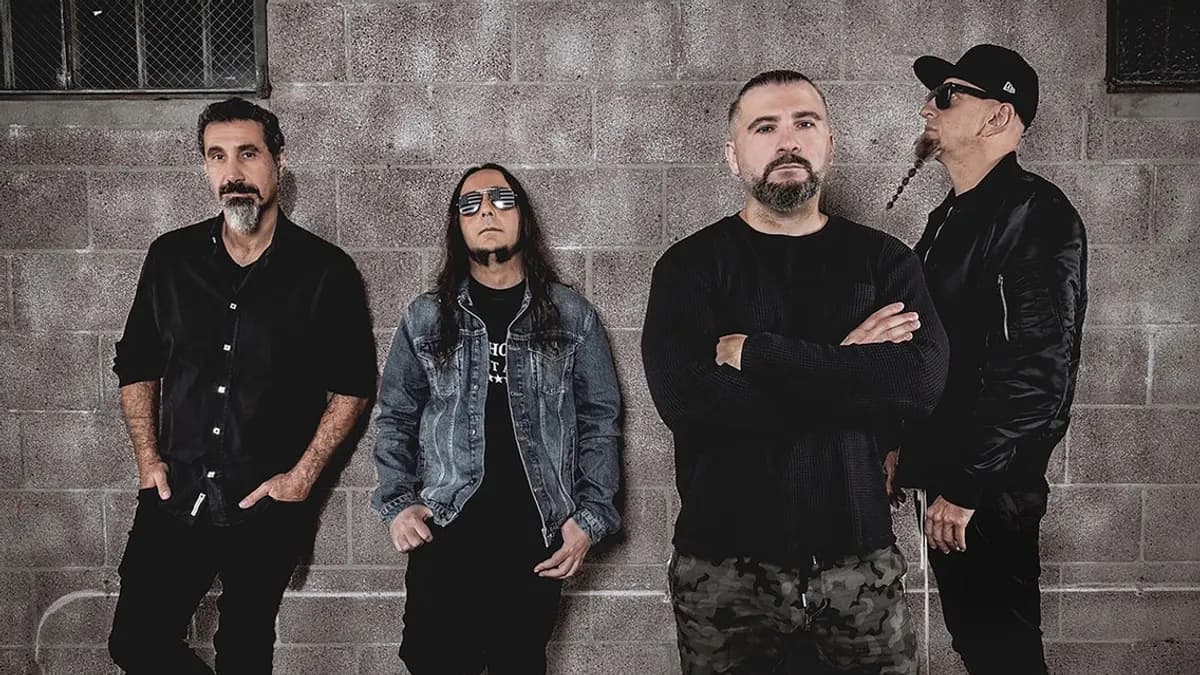
System of a Down formed in Glendale, California in 1994 out of the same Armenian-American suburban scene that produced a generation of musicians, comedians, and artists tied to the diaspora that settled in greater Los Angeles after the 1915 Armenian Genocide. Serj Tankian and Daron Malakian had been writing together in a previous project called Soil; when that band ended in 1995 they pulled in bassist Shavo Odadjian — a friend from Rose and Alex Pilibos Armenian School — and drummer Andy Khachaturian, who was replaced by John Dolmayan in 1997 in the lineup that has now held for nearly thirty years. The band signed to Rick Rubin's American Recordings on the strength of demo work and a relentless Los Angeles club run, and the self-titled 1998 debut introduced what would become the signature System sound: Malakian's serrated, Middle Eastern-inflected guitar riffs, Odadjian and Dolmayan's lurching rhythm section, and Tankian's operatic, polyglot vocal — capable in the same song of growled scat, bel canto melody, and pointed political wordplay. Armenian heritage is not a stylistic affectation in the catalogue but a structural element: the Phrygian and Hijaz scales that run through Malakian's lead lines, the diasporic ear for cadence in Tankian's phrasing, and a willingness to fold Soviet- and Anatolian-era melodic vocabulary into stadium-scale heavy music are what make the band sound unlike any other act of the 2001-era nu-metal cycle. Toxicity in September 2001 made the band one of the biggest rock acts on the planet; the record's release week coincided almost exactly with the September 11 attacks, and the song Chop Suey! was placed on Clear Channel's notorious 'songs of questionable lyrical content' list in the aftermath. Steal This Album in 2002, then the back-to-back Mezmerize and Hypnotize in May and November 2005, completed the original studio run and made SOAD the only act other than the Beatles to land two No. 1 Billboard albums inside a single calendar year. The lyrical politics of the catalogue — opposition to American foreign policy, the prison-industrial complex, drug policy, and most centrally the formal recognition of the Armenian Genocide by the United States and Turkey — became inseparable from the band's identity, most directly on Holy Mountains, P.L.U.C.K., and the explicitly Armenia-funding 2020 singles. In late 2006 the band announced an indefinite hiatus from new music, and although Tankian, Malakian, Odadjian, and Dolmayan have all pursued solo and side projects since (Scars on Broadway, Achozen, Tankian's solo records and orchestral work), the four have repeatedly returned to the stage together — most consequentially with the 2020 Protect the Land and Genocidal Humanoidz singles released to raise funds for Armenia and Artsakh during the second Nagorno-Karabakh war.