Keith Urban Setlist 2026 — Songs, Order & Running Time
The latest Keith Urban 2026 tour setlist, song order, and typical running time. Setlists can change night to night but the core structure usually holds across the tour.
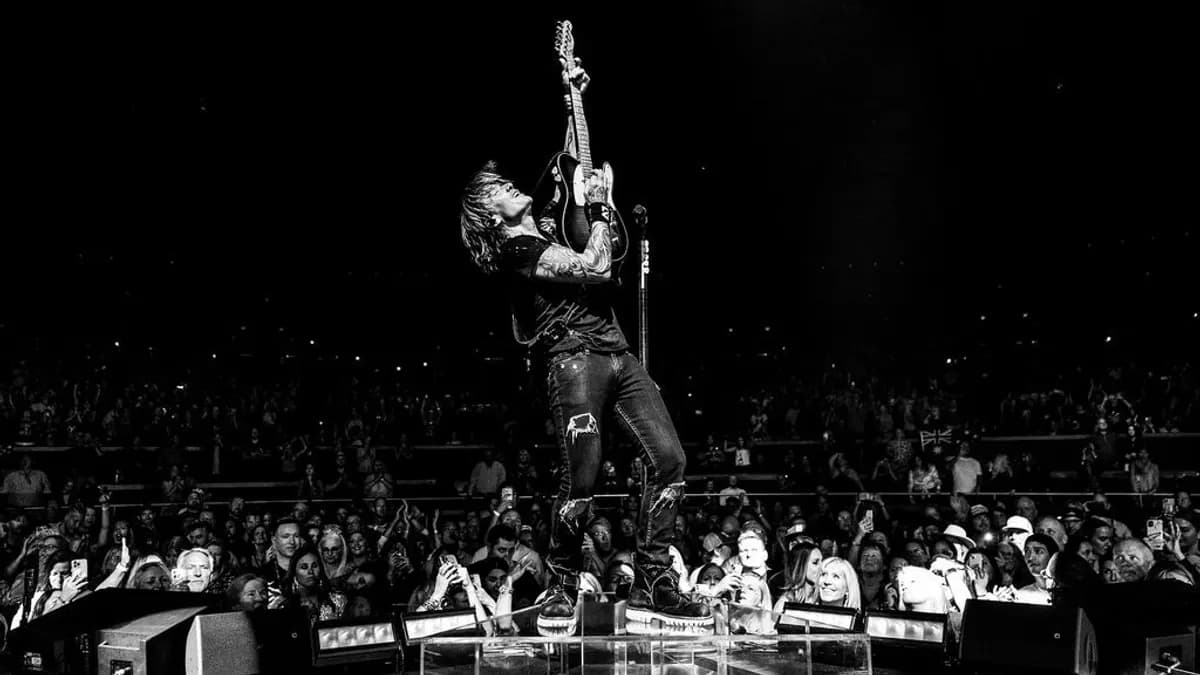
Keith Urban dates & tickets
Find a date, check available prices, and explore ticket options.
Keith Urban
BleauLive Theater At Fontainebleau Las Vegas · Las Vegas · US
20:00 local timeFrom$156.00 USD
Find ticketsKeith Urban
BleauLive Theater At Fontainebleau Las Vegas · Las Vegas · US
20:00 local timeFrom$184.00 USD
Find ticketsSan Antonio Stock Show and Rodeo (Keith Urban)
Frost Bank Center · San Antonio · US
12:00 local timeFrom$48.00 USD
Find ticketsSan Antonio Stock Show and Rodeo (Keith Urban)
Frost Bank Center · San Antonio · US
19:30 local timeFrom$49.00 USD
Find tickets
Prices are per ticket when supplied by the provider. Availability and fees may change at checkout. Currency conversions marked ≈ are estimates.
Songs Keith Urban Fans Expect to Hear
A confirmed Keith Urban setlist is not published before each show, but headline sets lean heavily on the catalogue's biggest songs. These are Keith Urban's 15 most popular tracks right now, ranked by streaming popularity — the songs most likely to make the 2026 set.
- One Too Many
- Somebody Like You
- Coming Home (feat. Julia Michaels)
- Blue Ain't Your Color
- The Fighter (feat. Carrie Underwood)
- You'll Think of Me
- Wild Hearts
- God Whispered Your Name
- For You
- Never Comin Down (feat. Shy Carter)
- We Were
- Parallel Line
- Brown Eyes Baby
- Making Memories of Us
- Female
Popularity from the iTunes Search API · listen on Apple Music. Not a confirmed running order; fan-reported setlists appear on Setlist.fm after each show.
Keith Urban 2026 Tour Setlist Structure
Keith Urban, the American country pop act, currently has 4 confirmed live dates — the most recent routing points at BleauLive Theater At Fontainebleau Las Vegas in Las Vegas, so the song order below reflects how country pop headline sets of this size are typically paced.
Recent Keith Urban concerts have averaged between 18 and 24 songs spread across roughly 90 to 120 minutes of performance time (excluding opener). The shows typically follow this rough structure:
- Opener (song 1 to 2). A high-energy hit to set the tone.
- Hit block (song 3 to 7). A run of the most-streamed singles.
- Acoustic / storytelling moment (song 8 to 10). Stripped-back arrangements and banter.
- Deep-cut set (song 11 to 15). Fan favorites and newer album tracks.
- Peak run (song 16 to 20). The dancefloor anthems and biggest singalongs.
- Encore (song 21 to 24). A 2 to 3 song encore featuring the signature closer.
Does the Keith Urban Setlist Change Night to Night?
The core of the Keith Urban 2026 setlist — the singles and the staging — stays consistent across the tour so production cues work from night to night. Smaller changes (a deep cut swap, a city-specific cover, or an acoustic surprise) happen on some nights. For the exact setlist from a specific Keith Urban show, check fan-submitted setlists on Setlist.fm after the concert.
Keith Urban Setlist — FAQ
How many songs does Keith Urban play on the 2026 tour?▼
Does Keith Urban change the setlist every night?▼
How much are Keith Urban tickets in 2026?▼
When is Keith Urban's next concert?▼
Where is Keith Urban touring in 2026?▼
How do I get Keith Urban presale tickets?▼
Does Keith Urban do meet and greets or VIP packages?▼
How long is a Keith Urban concert?▼
Can I buy Keith Urban tickets on the day of the show?▼
Is Keith Urban coming to Canada in 2026?▼
Is Keith Urban performing near me?▼
What time does a Keith Urban concert start?▼
About Keith Urban
Keith Lionel Urban was born October 26, 1967 in Whangarei, New Zealand, the second son of Bob and Marienne Urban. The family relocated to Caboolture, on the outer northern fringe of Brisbane, Queensland when Keith was two, and the Australian country-music scene of the 1970s and early 1980s — the touring circuit anchored by Slim Dusty, Buddy Williams and the Tamworth Country Music Festival — became the soundtrack of his childhood. His father ran a convenience store and played in pickup country bands on the weekend, his mother taught him to read music, and he was performing in local talent quests by the time he was six. By his mid-teens he was a regular fixture on Australian country television, winning the Star Maker competition at Tamworth in 1990, releasing his self-titled Australian debut album the same year on EMI Australia, and starting to build the Telecaster-driven style — a hybrid of Albert Lee's chicken-pickin', Mark Knopfler's fingerstyle phrasing, and Brent Mason's Nashville session vocabulary — that has remained the foundation of his playing.
He moved to Nashville in 1992, took the side-musician's path that almost every Australian country artist before him had taken, and spent close to a decade as a working session guitarist and songwriter while trying to land a US solo deal. The country-rock trio The Ranch released one album for Capitol Nashville in 1997 to critical interest and modest commercial returns before the band quietly broke up. Capitol kept Urban on as a solo artist and the 1999 self-titled album — featuring the breakthrough single "But for the Grace of God" — gave him his first US country No. 1. "Golden Road" followed in 2002 with "Somebody Like You" and "Raining on Sunday"; "Be Here" arrived in 2004, sold platinum multiple times over, and produced four No. 1 singles in succession. "Love, Pain & the Whole Crazy Thing" in 2006 brought his first Grammy. The years that followed delivered "Defying Gravity" (2009), "Get Closer" (2010), "Fuse" (2013), "Ripcord" (2016), "Graffiti U" (2018), "The Speed of Now Part 1" (2020) and "HIGH" (2024) — a roughly two-year cadence that has kept the live set continuously refreshed and the country radio profile sustained across the long shift from CD-era country to streaming-era country pop.
The American Idol chapter started in Australia, where Urban judged the local version of the franchise for four seasons in the late 2000s, and continued in the United States across seasons 12 through 15 of American Idol between 2013 and 2016, sharing the panel with Mariah Carey, Nicki Minaj, Randy Jackson, Harry Connick Jr. and Jennifer Lopez. The exposure widened the audience well beyond country radio and is part of why his arena routing pulls a more diverse demographic than most country headliners. The Grammy total sits at four, the ACM Awards count is in double digits, the CMA hardware includes Entertainer of the Year, and the touring side has kept rolling at arena scale across the US, Australia, Canada and the UK without serious interruption. His Nashville production team — the same core road band, monitor and front-of-house engineers, and lighting designer have been with him through multiple album cycles — is one of the longest-running setups in country touring, which is part of why the live show holds together night after night with so few moving parts visibly out of place.