Rock · Updated Oct 18, 2026
Limp Bizkit Tour 2027
Tickets, Dates & Prices

Limp Bizkit tickets & tour dates
Find a date, check available prices, and explore ticket options.
Limp Bizkit
FNB Stadium · Johannesburg · South Africa
18:00 local timeFrom$139 USD
Find ticketsMetallica
BC Place Stadium · Vancouver · CA
18:00 local timeFrom$259 USD
Find ticketsMetallica
Snapdragon Stadium · San Diego · US
18:00 local timeFrom$354 USD
Find ticketsMetallica
Sun Bowl Stadium · El Paso · US
18:00 local timeFrom$239 USD
Find ticketsMetallica
Alamodome · San Antonio · US
18:00 local timeFrom$151 USD
Find ticketsMetallica
Arrowhead Stadium · Kansas City · US
18:00 local timeFrom$86 USD
Find ticketsMetallica
Carter Finley Stadium · Raleigh · US
18:00 local timeFrom$217 USD
Find ticketsMetallica
Lucas Oil Stadium · Indianapolis · US
18:00 local timeFrom$112 USD
Find ticketsMetallica
Lucas Oil Stadium Parking Lots · Indianapolis · US
19:00 local timeFrom$115 USD
Find ticketsMetallica
Highmark Stadium · New York · US
18:00 local timeFrom$92 USD
Find ticketsMetallica
Camp Randall Stadium · Madison · US
18:00 local timeFrom$256 USD
Find ticketsMetallica
Huntington Bank Field · Cleveland · US
18:00 local timeFrom$89 USD
Find ticketsMetallica
Rice Eccles Stadium · Salt Lake City · US
18:00 local timeFrom$124 USD
Find tickets
Prices are per ticket when supplied by the provider. Availability and fees may change at checkout. Prices shown in your display currency are converted estimates.
Limp Bizkit Tickets Near You — Shows by City
12 citiesLimp Bizkit is playing 12 cities this tour. Tap any city for exact dates, venue info, seat prices, and parking.
 1 showFrom $139 USD1 showFrom $259 USD1 showFrom $354 USD1 showFrom $239 USD1 showFrom $151 USD1 showFrom $86 USD1 showFrom $217 USD2 showsFrom $112 USD1 showFrom $92 USD1 showFrom $256 USD1 showFrom $89 USD1 showFrom $124 USD
Where Is Limp Bizkit Playing?
12 cities12 cities have a listed Limp Bizkit date worldwide, refreshed daily from our ticket providers. A city missing here has no date in our feed; it may still have been announced elsewhere.
Limp Bizkit are the Jacksonville, Florida five-piece who took the most unlikely entrance ramp in rock history — a tattooed Florida tattoo artist screaming over downtuned seven-string riffs with a turntablist hanging off the back of the rig — and turned it into one of the defining stadium-rock blueprints of the late 1990s and early 2000s. Fred Durst, Wes Borland, Sam Rivers, John Otto and DJ Lethal built a sound on the Jacksonville club circuit between 1994 and 1997 that took the bounce of Run-DMC and Public Enemy, ran it through the low-end of Korn and Helmet, dressed it in the visual chaos of Wes Borland's painted-body costumes, and let Fred Durst's red Yankee cap and conversational mic delivery carry the rest. By 2000 they were the biggest rock band in the United States by a wide margin, with Chocolate Starfish and the Hot Dog Flavored Water debuting at number one on the Billboard 200 with more than a million copies in its first week — at the time the fastest-selling rock album in SoundScan history. They headlined Woodstock 99 on the night that defined that festival's legacy, sold out arenas across two continents on the Significant Other and Chocolate Starfish cycles, and then retreated for most of the 2000s and 2010s before re-emerging as one of the most-loved festival-headline acts of the late-2010s nu-metal nostalgia wave. The 2021 surprise album Still Sucks, the viral Lollapalooza 2021 set, and the now-running Loserville Tour cycle reframed the band as a generational live act, and the audience that grew up screaming the words to Rollin', My Way, My Generation and Break Stuff has handed the band down to a new wave of fans. The October 2025 death of founding bassist Sam Rivers landed in the middle of that resurgence and has been the emotional core of every Limp Bizkit show since — the band have honoured the loss publicly, the live show carries his memory forward, and the audience response across the months that followed has confirmed what the catalogue numbers always implied.
- When is Limp Bizkit's next show?
- Sun, December 13, 2026 at FNB Stadium.
- How much are Limp Bizkit tickets?
- $86 USD to $12,184,834 USD advertised across 13 priced dates, before fees; varies by city and seat section.
- Is Limp Bizkit touring near me?
- 13 listed dates across 12 cities: Johannesburg, Vancouver, San Diego, El Paso, San Antonio, Kansas City and 6 more.
- How do I get Limp Bizkit tickets?
- Pick a date below; each row links to the seller that listed it, with its advertised starting price.
Limp Bizkit Ticket Prices 2027 — Cheapest Seats & Average Cost
Limp Bizkit ticket prices vary by city, venue size, day of week, and seat section. Live price breakdown across all 2027 tour stops:
Artist guide & FAQ
Explore Limp Bizkit's background, ticket information, and answers to common questions.
Limp Bizkit Concert FAQ
When is Limp Bizkit's next concert?▼
Where is Limp Bizkit playing in 2027?▼
How much are Limp Bizkit tickets?▼
Who is listed with Limp Bizkit on the bill?▼
Who are Limp Bizkit?▼
What is the Limp Bizkit Loserville Tour?▼
About Limp Bizkit
13 Limp Bizkit dates are listed from Dec 13, 2026 to Jun 19, 2027 across 12 cities in 3 countries (SOUTH AFRICA, Canada and United States). The next show is December 13, 2026 in Johannesburg. Advertised starting prices begin at $86 USD (Kansas City), before fees.
Inside Limp Bizkit
Limp Bizkit are the Jacksonville, Florida five-piece who took the most unlikely entrance ramp in rock history — a tattooed Florida tattoo artist screaming over downtuned seven-string riffs with a turntablist hanging off the back of the rig — and turned it into one of the defining stadium-rock blueprints of the late 1990s and early 2000s. Fred Durst, Wes Borland, Sam Rivers, John Otto and DJ Lethal built a sound on the Jacksonville club circuit between 1994 and 1997 that took the bounce of Run-DMC and Public Enemy, ran it through the low-end of Korn and Helmet, dressed it in the visual chaos of Wes Borland's painted-body costumes, and let Fred Durst's red Yankee cap and conversational mic delivery carry the rest.
By 2000 they were the biggest rock band in the United States by a wide margin, with Chocolate Starfish and the Hot Dog Flavored Water debuting at number one on the Billboard 200 with more than a million copies in its first week — at the time the fastest-selling rock album in SoundScan history. They headlined Woodstock 99 on the night that defined that festival's legacy, sold out arenas across two continents on the Significant Other and Chocolate Starfish cycles, and then retreated for most of the 2000s and 2010s before re-emerging as one of the most-loved festival-headline acts of the late-2010s nu-metal nostalgia wave.
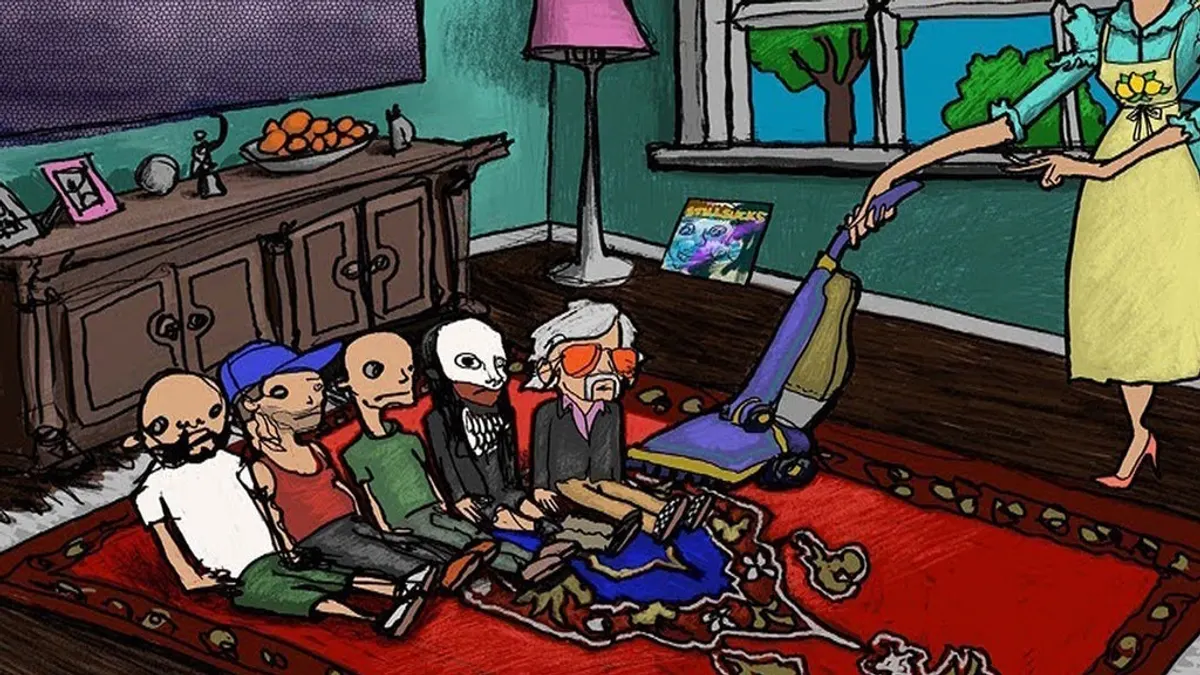
The 2021 surprise album Still Sucks, the viral Lollapalooza 2021 set, and the now-running Loserville Tour cycle reframed the band as a generational live act, and the audience that grew up screaming the words to Rollin', My Way, My Generation and Break Stuff has handed the band down to a new wave of fans. The October 2025 death of founding bassist Sam Rivers landed in the middle of that resurgence and has been the emotional core of every Limp Bizkit show since — the band have honoured the loss publicly, the live show carries his memory forward, and the audience response across the months that followed has confirmed what the catalogue numbers always implied.
About Limp Bizkit
Limp Bizkit formed in Jacksonville, Florida in 1994 when Fred Durst — a tattoo artist writing rhymes over Run-DMC-style breaks — connected with bassist Sam Rivers and Rivers' cousin John Otto on drums. They auditioned local guitarists for months before settling on Wes Borland, an art-school graduate with a taste for downtuned seven-string riffing and avant-garde stage costumes that would shape the band's visual identity.
DJ Lethal, formerly of House of Pain, joined in 1996 after a chance encounter with Korn's Brian 'Head' Welch on the Jacksonville circuit. The completed five-piece signed to Flip/Interscope in 1997 and released Three Dollar Bill, Y'all$ that same year — a debut produced by Ross Robinson that paired Borland's bounce-heavy riffs with Durst's confessional-aggression delivery and produced an unlikely crossover hit in a Faith cover, rebuilt as a downtuned headbanger, that pulled the band into MTV rotation and onto the 1997 Ozzfest tour.
Significant Other arrived in June 1999 and exploded: it debuted at number one on the Billboard 200 with 644,000 copies in its first week, was certified seven-times platinum in the United States, produced Nookie, Re-Arranged and N 2 Gether Now (a collaboration with Method Man) as singles, and made the band a household name almost overnight. The cycle included the now-infamous Woodstock 99 main-stage slot on July 24, 1999 — a set finishing with Break Stuff turning the festival's deteriorating crowd dynamics into a national news story.
Chocolate Starfish and the Hot Dog Flavored Water followed in October 2000 with a first-week sales figure of 1.05 million copies — at the time the largest opening week ever for a rock album in SoundScan-tracked history — and produced Rollin' (Air Raid Vehicle), My Generation, My Way, Take a Look Around (the Mission: Impossible 2 theme), and Boiler. Wes Borland left in 2001 and was replaced briefly by Mike Smith for the 2003 album Results May Vary; the dissatisfaction with that record drove Borland's return for 2005's The Unquestionable Truth (Part 1), an intentionally darker EP-length release the band describe as their reset.
Gold Cobra followed in 2011 after a hiatus, the band toured at theatre and festival scale through the mid-2010s, and then in October 2021 — without any pre-release campaign, marketing budget or single — Fred Durst dropped Still Sucks as a surprise release on Halloween, the title a self-aware nod to the band's ongoing critical reception. Still Sucks was their first full-length in a decade and the touring cycle around it drove the modern Limp Bizkit live resurgence: viral Lollapalooza appearances, the multi-month Loserville Tour, headline festival slots across North America and Europe.
Sam Rivers passed away on October 18, 2025; the band have honoured his memory publicly and continued the Loserville touring cycle in tribute, with his bass parts kept central to the live show and the audience response in the months that followed underscoring the loss for fans of the band's generation.
Limp Bizkit tour: Loserville and the festival-headline circuit
The Loserville Tour is Limp Bizkit's active touring banner and has been the band's primary live vehicle through the back half of the 2020s. The format is deliberately arena- and amphitheater-scale rather than stadium-scale — the band have spoken openly about preferring rooms in the 12,000 to 22,000 capacity range where the production can land without feeling diluted — and the routing has now covered North America, the United Kingdom, mainland Europe, Australia, Japan and selected Latin American markets across multiple legs.
Sets run roughly 80 to 95 minutes and lean hard on the Chocolate Starfish and Significant Other material that the audience came for, with a tight rotation of Still Sucks cuts pushed into the middle of the show and a handful of deeper Three Dollar Bill, Y'all$ tracks and curveball covers landing in the back third. The production itself is intentionally stripped relative to the band's pop-rock contemporaries — Wes Borland's costume design (frequently a different full-body painted look every leg of the tour, sometimes a different one every night) is the visual centerpiece, with a relatively conservative LED rig, programmed lighting and the now-traditional Fred Durst red Yankees cap acting as the show's anchor image.
Festival appearances run on a parallel track to the Loserville Tour and are a structural part of the calendar rather than a side activity. The band have headlined or co-headlined Lollapalooza, Reading and Leeds, Hellfest, Download, Aftershock, Welcome to Rockville, Knotfest, Sonic Temple, Rock am Ring and a long list of European festivals across the recent cycle, with a viral Lollapalooza 2021 set widely credited as the moment the wider audience reset its assumptions about the band.
The Sam Rivers tribute context has become part of the live show in the months since October 2025: his bass parts remain central to the arrangement, the band have spoken to the audience about him directly during shows, and the response across markets has been a sustained, generation-spanning reaffirmation of why Limp Bizkit are still on the road three decades into the band's life. Hedge accordingly on any 2026 routing specifics — leg-by-leg dates are still being announced — but the broad shape of the cycle (arenas, amphitheaters, festival headlines) has held steady across the multi-year run.
Limp Bizkit tickets: pricing, presales and the resale market
Limp Bizkit tickets on the Loserville Tour cycle generally open at $45 to $75 for upper-level seats, $90 to $160 for lower-bowl and reserved floor, $180 to $300 for general admission pit and front-of-stage standing, and $400 and up for the limited VIP packages that include early entry, premium viewing platforms, soundcheck access and a branded merch bundle. Amphitheater shows skew slightly cheaper on the lawn ($30 to $55) and slightly higher in reserved pavilion seats.
Festival appearances are a separate question: when Limp Bizkit headline or co-headline a festival, you are paying for a day pass or weekend pass to the event rather than a band-specific ticket, and pricing reflects the festival economy rather than the headline-tour economy. Primary on-sales run through Ticketmaster in North America, AXS at select venues, Live Nation's international platforms across Europe and Australia, and the band's own limpbizkit.com fan presales the week before each leg's general on-sale.
Verified Fan registration is not the band's standard practice — the on-sale model has stayed traditional (Citi cardholder presale Tuesday, venue and Live Nation presales Wednesday and Thursday, general on-sale Friday at 10 a.m. local) across the Loserville run. Secondary market reality for the most in-demand markets — London, Los Angeles, New York, Toronto, Chicago, Sydney — is that floor and pit inventory clears in the first few minutes of the general on-sale and reappears on Ticketmaster Verified Resale, AXS Official Resale and StubHub at one and a half to three times face value.
Avoid generic search-ad ticket sites and any seller insisting on payment outside an escrowed marketplace. Tickets bought from unverified resellers are routinely flagged at the gate when scanned because they are duplicates or screenshots of expired QR codes.
If a deal looks significantly below face value for a high-demand date, it is almost certainly fraudulent — verified resale trades at or above face value for in-demand Limp Bizkit cities.
Limp Bizkit setlist — what they play
A typical Limp Bizkit setlist on the Loserville Tour cycle runs 17 to 20 songs across roughly 85 to 95 minutes and is structured to land both the catalogue hits and the modern material at full force. The show opens with the 'Welcome to Loserville' intro tape and lands quickly on a Chocolate Starfish-era anchor (Hot Dog or Show Me What You Got).
The early portion rotates Significant Other cuts (Nookie, Just Like This, N 2 Gether Now, Re-Arranged) with Three Dollar Bill, Y'all$ deep cuts (Counterfeit, Faith, Stuck) before the first turn. The middle of the show is built around the Still Sucks material (Dad Vibes, Out of Style, Turn It Up, Don't Change) with slower moments — Behind Blue Eyes (the band's Who cover) or a Wes Borland guitar feature — between the heavier blocks.
The back third is the run the audience came for: Take a Look Around as a mid-tempo anchor, then My Way, My Generation with crowd-call interplay, and the Rollin' singalong as the back-half peak. The encore is almost always Break Stuff, with the closing chorus delivered with the entire room screaming the words back.
Setlist.fm logs show a stable core of about twelve songs and four to six rotating slots, and the band have used the post-October 2025 dates to honour Sam Rivers with specific bass-feature moments that the audience has met with sustained applause.
Limp Bizkit meet and greet: what is actually available
Formal paid meet-and-greet packages with Limp Bizkit have been intermittent across the band's career and are not a fixed structural feature of the Loserville Tour. When VIP packages have been offered on the recent cycle, they have typically included early venue entry, premium viewing-platform access, a soundcheck listen-in, a branded merch bundle (poster, lanyard, Loserville t-shirt) and occasionally a group photograph with the band depending on the date — but rarely a guaranteed one-on-one signing.
The packages have been sold through Future Beat or directly through Ticketmaster's VIP Nation depending on the leg, and have been priced in the $400 to $750 range above the underlying ticket. The realistic path to meeting Fred Durst, Wes Borland, John Otto or DJ Lethal outside of those packages is through the festival ecosystem — backstage and artist-lounge access at events where the band are headlining sometimes produces informal interactions that arena tours do not — and through the band's own social media windows where Durst in particular has been active and accessible to fans across the modern cycle.
If a third-party site is selling a Limp Bizkit meet-and-greet package outside of the official VIP channels, treat it with skepticism — it is almost certainly a repackaged pit ticket rather than guaranteed access to the band themselves.
Tour cities
Jacksonville
Jacksonville is Limp Bizkit's hometown and the city the band reference more often than any other on stage. Fred Durst's tattoo-shop origin story, Sam Rivers and John Otto's cousin partnership, and the early Jacksonville club shows at the Milk Bar and Einstein A Go-Go that built the band's first audience are all part of the local mythology, and the band have made a point of returning to the market across every major tour cycle. The standard venue for the headline tour is the Daily's Place amphitheater adjacent to EverBank Stadium in the Sports Complex — a 5,500-capacity outdoor amphitheater with a cantilevered roof and a downtown skyline backdrop — with the larger VyStar Veterans Memorial Arena downtown handling indoor winter dates. Welcome to Rockville at Daytona Beach (about 90 miles south) has hosted the band as a festival headliner across multiple years and brings the broader Florida audience into the same room. Local presale codes generally arrive through Live Nation Florida and Ticketmaster the week of the on-sale, with the strongest demand of any single market on the tour. The hometown shows have run as Sam Rivers tribute nights since October 2025 with specific local context from Durst and the band acknowledging the bassist's deep Jacksonville roots.
Los Angeles
Los Angeles is one of the band's largest and most consistently sold-out single-city markets in North America. The standard headline venue is the Kia Forum in Inglewood (17,500 capacity) or the YouTube Theater for the smaller-room dates, with the Hollywood Palladium handling the band's club-scale Rose Avenue-style throwback shows when those happen. Aftershock at Discovery Park in Sacramento (a five-hour drive north) and the Welcome to Rockville offshoot festivals also pull the Southern California audience for headline appearances. The LA crowd at Limp Bizkit shows skews heavily nostalgic — the millennial and elder-Gen-Z audience that grew up on Chocolate Starfish forms the majority — with a meaningful contingent of late-2010s and 2020s fans introduced to the band through the viral Lollapalooza 2021 set and the Still Sucks album cycle. Expect heavy presale demand, a quick primary sellout, and a secondary market that runs roughly two to three times face value for in-demand pit and floor inventory.
New York
The New York metro Limp Bizkit date is at Madison Square Garden in midtown Manhattan, the UBS Arena in Belmont Park or Prudential Center in Newark depending on the leg's routing and time of year, with summer amphitheater stops at Northwell at Jones Beach Theater on Long Island and PNC Bank Arts Center in New Jersey. MSG is reached via the Penn Station hub and is the most efficient transit access of any major arena in North America. The post-show clearance to Penn or the surrounding subway lines runs heavy but quick. Fred Durst's red Yankee cap — a signature item across every era of the band — lands a particular kind of crowd reaction at the New York shows where the visual reference is on-brand for the room. The New York market has been a flagship Limp Bizkit stop since the Significant Other cycle in 1999 and the band have routinely played multi-night MSG residencies on the bigger tour cycles, with secondary-market prices running among the highest of any single market on the run.
Chicago
Chicago is the band's primary Midwest anchor and one of the markets they have played most consistently across every Limp Bizkit touring cycle. United Center on the Near West Side (23,500 capacity) handles the headline arena dates, with Allstate Arena in Rosemont and the Aragon Ballroom in Uptown covering scaled-down or smaller-room appearances. The outdoor summer routing books Huntington Bank Pavilion at Northerly Island on the lakefront with the downtown skyline backdrop that fits the band's visual language particularly well. Lollapalooza in Grant Park has been a recurring fixture across the modern cycle — the viral 2021 appearance that reset the band's wider critical reception was on the Bud Light Seltzer Stage and has since been re-aired and re-cut by the festival across multiple subsequent years. Local Live Nation presale codes generally arrive the Monday before a Friday on-sale, with venue and radio presales Tuesday and Wednesday. Chicago shows draw heavily from the surrounding Midwest cities (Milwaukee, Indianapolis, Detroit, the Twin Cities) and the post-show clearance at Northerly Island in particular runs slow through the McCormick Place corridor.
Toronto
Toronto sits on essentially every Limp Bizkit North American routing and has done since the Significant Other cycle in 1999. The standard venue is Scotiabank Arena (formerly the Air Canada Centre) downtown, a 19,800-capacity NHL room with direct access from Union Station and the Path underground network, and the outdoor summer routing books Budweiser Stage on the Toronto waterfront and Echo Beach next door for the amphitheater-scale dates. The Phoenix Concert Theatre and the Danforth Music Hall handled the band's earlier theater-scale and reset-cycle dates before the resurgence pushed them back to arena bookings. Toronto on a Limp Bizkit tour usually falls on a Tuesday or Wednesday because the routing puts the city between Montreal and the US Midwest. Local presale codes generally arrive through Live Nation Canada and the venue with the standard Wednesday venue presale and Friday 10 a.m. Eastern general on-sale, and the secondary market runs at roughly 150 to 250 percent of face value for the bigger rooms across the modern Loserville cycle.
London
London is one of the band's largest non-North American markets and has been since the original Chocolate Starfish UK tour in 2001. The standard headline venue is the OVO Arena Wembley (12,500 capacity) or the larger O2 Arena on the Greenwich peninsula (20,000 capacity), with Alexandra Palace in north London handling the band's slightly smaller-room appearances and Brixton Academy covering the throwback theatre-scale shows when those happen. The O2 is reached directly via the North Greenwich Jubilee Line station and the Thames Clipper river boat service from central London; the Wembley arena complex is on the Metropolitan and Jubilee Lines at Wembley Park. Download Festival at Donington Park (a three-hour drive north of London) has been the band's recurring UK festival appearance across the modern cycle, with the 2021 Download Pilot set widely credited as the European mirror to the viral Lollapalooza appearance the same summer. Reading and Leeds Festival also book the band at headline scale on alternating cycles. UK on-sales generally run through Ticketmaster UK and AXS UK with O2 Priority and Live Nation Premium presales midweek before the Friday 9 a.m. general on-sale.
Berlin
Berlin is the band's primary mainland-European anchor and one of the markets that has shown the most sustained growth across the Still Sucks and Loserville cycle. The standard venues are the Mercedes-Benz Arena at the East Side Mall (17,000 capacity) for headline arena dates and the Velodrom in Prenzlauer Berg (12,000 capacity) for smaller routing. The Wuhlheide outdoor amphitheater handles the summer dates with the open-air format that suits the band's festival-energy approach. Rock am Ring at the Nürburgring and Hurricane and Southside festivals across the broader German circuit have hosted the band at headline scale across multiple years, with the German crowd reputation for sustained chant-along participation fully deserved at Limp Bizkit shows. Berlin shows on the Loserville cycle have routinely sold out within the first week of the general on-sale, and the secondary market runs heavy across CTS Eventim and Ticketmaster DE. Plan for late-night U-Bahn routing back to central Berlin — the U1, U2 and S-Bahn from Warschauer Straße or Ostbahnhof run frequently after the show.
Sydney
Sydney is the standard Limp Bizkit Australian routing stop and one of the markets that has reliably delivered sold-out headline arena dates across every tour cycle from Chocolate Starfish through Loserville. The standard venue is Qudos Bank Arena in Sydney Olympic Park (21,000 capacity) for the headline arena dates, with Hordern Pavilion at Moore Park (5,500 capacity) handling the smaller-room and throwback routing. Good Things Festival across multiple Australian cities and Knotfest Australia at Centennial Park have hosted the band as a festival headliner. Sydney Olympic Park is reached on the T7 Olympic Park rail line from Lidcombe, a 30- to 40-minute trip from Central Station, with shuttle and bus alternatives during major events. Sydney summer evenings stay warm well after sunset; layers are sensible at the open-air festival dates and not particularly needed at the indoor Qudos Bank shows. The Australian audience for Limp Bizkit skews older than the North American audience (the original Significant Other and Chocolate Starfish cycle was a particular moment in Australian rock radio) and the modern reset has brought a younger contingent in around the edges.
Tokyo
Tokyo on a Limp Bizkit Asian routing is at the Tokyo Garden Theater (8,000 capacity) in Ariake or the larger Makuhari Messe in Chiba (more typically used for Summer Sonic appearances) depending on the cycle. Tokyo Garden Theater is reached via the Kokusai-Tenjijo or Tokyo Big Sight Yurikamome stations, both about 25 minutes from Shinjuku. Summer Sonic at Makuhari Messe is the band's standard Japanese festival appearance and has hosted Limp Bizkit at headline and co-headline scale across multiple years, with the Japanese crowd's distinctive synchronised chant-along response and impeccable post-show waste management forming part of the show's Japanese-leg signature. Japanese stadium and arena etiquette runs quiet between songs and loud during them; expect a precision in the crowd-call moments — the 'I Did It All For The' callback on Nookie, the closing chorus of Rollin' — that other markets rarely match. Doors open earlier in Japan than on most legs (typically three hours before showtime) and the merchandise queues form well before that.
Mexico City
Mexico City is one of Limp Bizkit's most consistently sold-out international markets. The standard venue is Pepsi Center WTC (8,000 capacity) for arena dates and the larger Foro Sol for festival-scale appearances. Knotfest Mexico at Foro Sol has hosted the band as a headliner. Plan for high altitude (2,250 m). The crowd's reputation for sustained chant-along participation at Limp Bizkit shows is well-earned, and the band have referenced the Knotfest Mexico audience as one of the loudest of the entire Loserville cycle.
Limp Bizkit prices by city
Advertised starting prices per city, before fees, in the seller's own currency.
| City | Dates | From | Up to |
|---|---|---|---|
| Kansas City | 1 | $86 USD | $11,598 USD |
| Cleveland | 1 | $89 USD | $8,026 USD |
| New York | 1 | $92 USD | $7,409 USD |
| Indianapolis | 2 | $112 USD | $12,936 USD |
| Salt Lake City | 1 | $124 USD | $8,643 USD |
| Johannesburg | 1 | $139 USD | $186 USD |
| San Antonio | 1 | $151 USD | $14,241 USD |
| Raleigh | 1 | $217 USD | $8,184 USD |
| El Paso | 1 | $239 USD | $10,302 USD |
| Madison | 1 | $256 USD | $12,178 USD |
| Vancouver | 1 | $259 USD | $6,262 USD |
| San Diego | 1 | $354 USD | $12,184,834 USD |
Fans Also Viewed
Other Rock artists on Catch Movement.



Also on tour now
- Bruce CockburnBruce Cockburn setlistOpening actTour dates
- Remi WolfRemi Wolf setlistOpening actTour dates
- JourneyJourney setlistOpening actTour dates
- TriviumTrivium setlistOpening actTour dates
- Barenaked LadiesBarenaked Ladies setlistOpening actTour dates
- WestlifeWestlife setlistOpening actTour dates
- Charli XCXCharli XCX setlistOpening actTour dates
- Rodrigo y GabrielaRodrigo y Gabriela setlistOpening actTour dates