Bill Burr Opening Act 2026 — Who is the Support?
Who is opening for Bill Burr in 2026? Check the additional performers named in event listings and learn where to verify support acts and set times for your date.
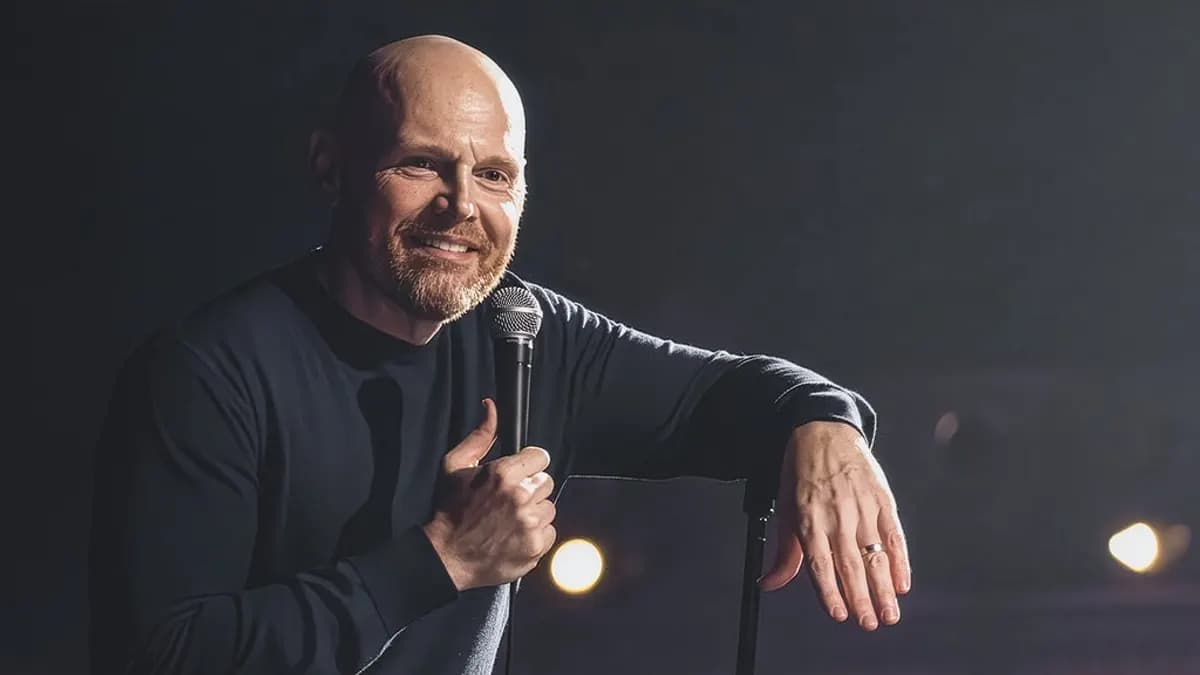
Who is opening for Bill Burr?
Weird Al Yankovic, Justin Willman, Norah Jones, Beck, St. Vincent, The Kills, Troy Van Leeuwen and Chad Smith are named alongside Bill Burr in the seller lineups for 1 of 1 listed 2026 date. The names come from the ticket listings; they do not confirm set order or stage times.
- Nov 16, 2026 · Los Angeles · The Wiltern — Weird Al Yankovic, Justin Willman, Norah Jones, Beck, St. Vincent, The Kills, Troy Van Leeuwen, Chad Smith, John McEnroe, Andrew Watt, Sarah Silverman, Dean Delray, Dan Soder, Michael Shuman
Bill Burr dates & tickets
Find a date, check available prices, and explore ticket options.
Josh Homme & Friends: A Benefit for CORE & The Sweet Stuff Foundation
The Wiltern · Los Angeles · US
19:00 local timeCheck ticket prices
Find tickets
Prices are per ticket when supplied by the provider. Availability and fees may change at checkout. Prices shown in your display currency are converted estimates.
How to confirm the Bill Burr opener for your date
Support acts are added to a listing when the promoter supplies them, and they can differ from city to city. A listing that shows only Bill Burr's name does not prove there is no opener — check the seller listing and the venue's announcement for your date before planning around a support set.
A ticket normally covers the whole advertised bill for that event; the listed start time is the event start, not a confirmed opener or headliner time. All Bill Burr tour dates · Bill Burr setlist
Opening acts for other tours on the road now
- Bruno MarsBruno Mars opening act
- Carly Rae JepsenCarly Rae Jepsen opening act
- MercyMeMercyMe opening act
- SqueezeSqueeze opening act
- Wet Wet WetWet Wet Wet opening act
- Brandi CarlileBrandi Carlile opening act
- Don OmarDon Omar opening act
- John SummitJohn Summit opening act
- The High KingsThe High Kings opening act
- Nothing But ThievesNothing But Thieves opening act
- Rod WaveRod Wave opening act
- Dylan GossettDylan Gossett opening act
Bill Burr Opening Act — FAQ
When is Bill Burr's next concert?▼
Where is Bill Burr playing in 2026?▼
Who is listed with Bill Burr on the bill?▼
About Bill Burr
William Frederick Burr was born June 10, 1968 in Canton, Massachusetts, and raised in the working-class Boston suburbs in a large Irish-Catholic family — a detail that anchors a substantial share of his early stand-up material about his father, his mother, his upbringing, Catholic-school discipline, and the particular emotional vocabulary of the New England Irish-American household. He has spoken in interviews about a turbulent childhood, a chaotic emotional home, and the years of work in therapy that eventually pulled into the act as part of the writing — the gradual evolution from a hot-tempered young comic into the older, slightly-self-aware-but-still-furious headliner persona that defines the current era of the show. He attended Emerson College in Boston in the late 1980s and worked as a warehouse loader after graduating before committing to stand-up in his mid-twenties. The first decade was Boston clubs — the Comedy Studio in Harvard Square, the Comedy Connection in Faneuil Hall, Nick's Comedy Stop, the rooms that produced the late-1990s and early-2000s Boston comedy generation alongside Patrice O'Neal (a close friend and mentor whose 2011 death remains a touchstone in Burr's act and podcast) and the broader Opie and Anthony orbit. He moved to New York in the early 2000s, became a Comedy Cellar regular, and broke nationally with a Chappelle's Show appearance and the long-running circuit of Late Show with Conan O'Brien sets. The first hour special, Why Do I Do This?, dropped on Comedy Central in 2008 and locked in the touring brand at a national scale. The Monday Morning Podcast launched on May 1, 2007 as one of the first podcast vehicles in stand-up — a roughly hour-and-a-half free-association rant recorded every Monday and Thursday, no guests for most of its run, ranging across sports, marriage, parenting, current events, the comedy business, and whatever Burr is exercised about the week of recording. The podcast has run continuously for nearly two decades and has consistently sat near the top of the comedy-podcast charts, and its audience is one of the largest direct-to-fan engagement channels in stand-up. In 2012 he co-founded All Things Comedy with Al Madrigal, a comedian-owned podcast network and live-touring company that gave a generation of working comics an alternative to network-controlled distribution. The Netflix relationship started with the animated F is for Family in 2015 — Burr co-created the series with Michael Price, voiced the lead Frank Murphy, and ran it for five seasons through 2021. The Mandalorian role as Migs Mayfeld arrived in 2020 with the second-season episode 'The Believer' and recurred across the broader Star Wars Disney+ universe. He wrote, directed, and starred in Old Dads for Netflix in 2023, his first feature behind the camera. The stand-up specials chart the touring brand: Why Do I Do This? (2008, Comedy Central), Let It Go (2010, Comedy Central), You People Are All the Same (2012, Netflix — Netflix's first stand-up commission), I'm Sorry You Feel That Way (2014, Netflix, shot in black and white), Walk Your Way Out (2017, Netflix), Paper Tiger (2019, Netflix, shot at the Royal Albert Hall in London), Live at Red Rocks (2022, Netflix), and Drop Dead Years (2024, Hulu). He married Nia Renee Hill in 2013; they have two children and live in Los Angeles. The voice on stage is the same voice on the podcast and the same voice on screen: a Boston accent that thickens whenever he gets angry, an everyman frame of reference, a willingness to push past the comfort point on race, gender, marriage, money, and politics that has landed him in periodic controversy without ever shrinking the audience, and the slow-arc self-deprecation that lets him say almost anything because the joke is, ultimately, on him.